Communication Skills - Practical
[ Bpharm (Bachelor of Pharmacy) ]
Under Class: | 2nd Semester (Bpharm) |
Communication Skills - Practical - Experimental laboratory pdf record
Pharmacy - Bachelor of Pharmacy (Bpharm) - 2nd Semester - 1st Year - Subject/Practical Laboratory: Communication Skills - Practical (BP212P SEC1) - laboratory Experimental Note Download PDF
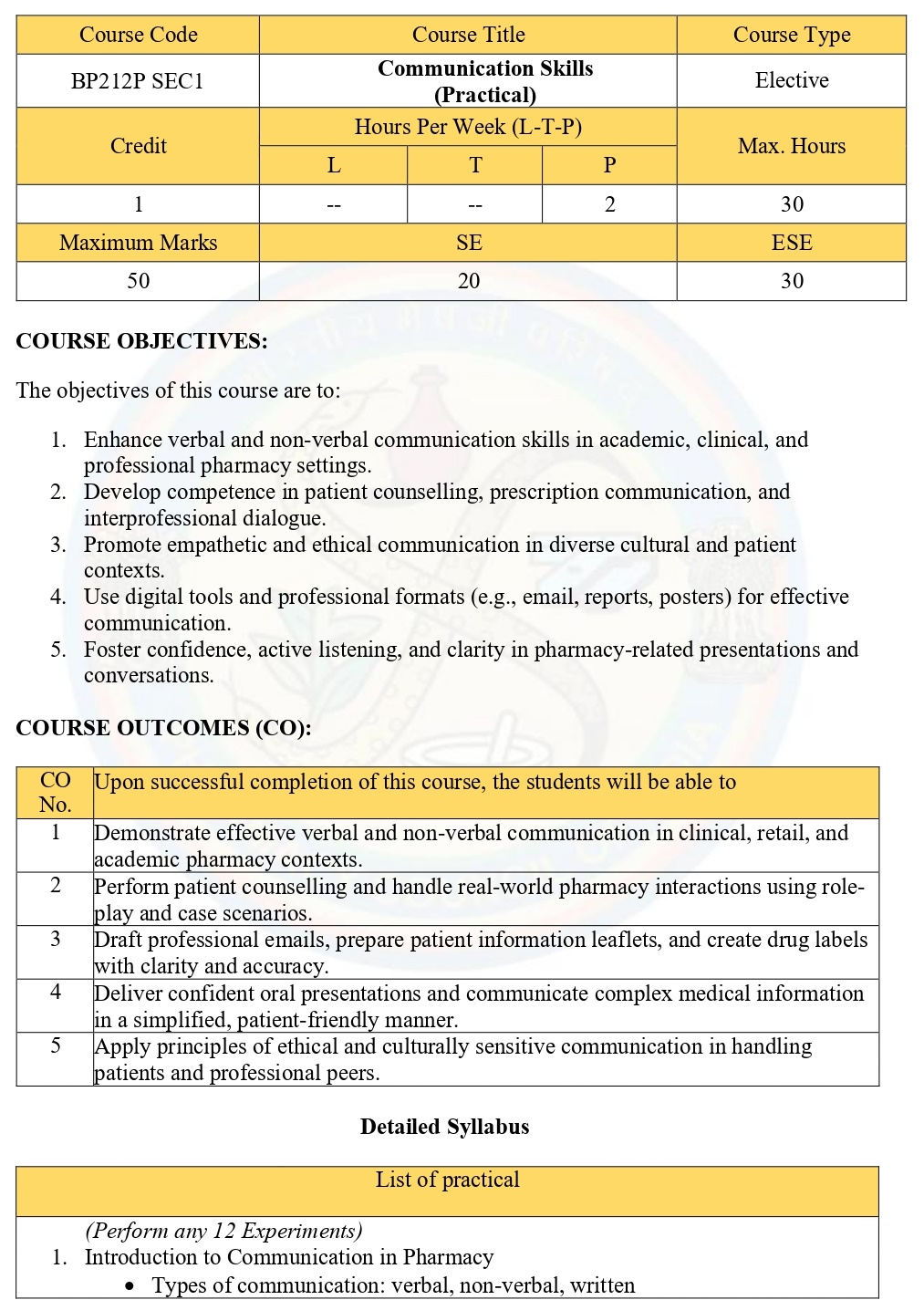
BP212P : SEC1
Communication
Skills (Practical)Elective
COURSE OBJECTIVES:
The objectives of
this course are to:
1. Enhance verbal and
non-verbal communication skills in academic, clinical, and professional
pharmacy settings.
2. Develop competence
in patient counselling, prescription communication, and interprofessional
dialogue.
3. Promote empathetic
and ethical communication in diverse cultural and patient contexts.
4. Use digital tools
and professional formats (e.g., email, reports, posters) for effective
communication.
5. Foster confidence,
active listening, and clarity in pharmacy-related presentations and
conversations.
COURSE OUTCOMES
(CO):
Upon successful
completion of this course, the students will be able to
1. Demonstrate
effective verbal and non-verbal communication in clinical, retail, and academic
pharmacy contexts.
2. Perform patient
counselling and handle real-world pharmacy interactions using role-play and
case scenarios.
3. Draft professional
emails, prepare patient information leaflets, and create drug labels with
clarity and accuracy.
4. Deliver confident
oral presentations and communicate complex medical information in a simplified,
patient-friendly manner.
5. Apply principles
of ethical and culturally sensitive communication in handling patients and professional
peers.
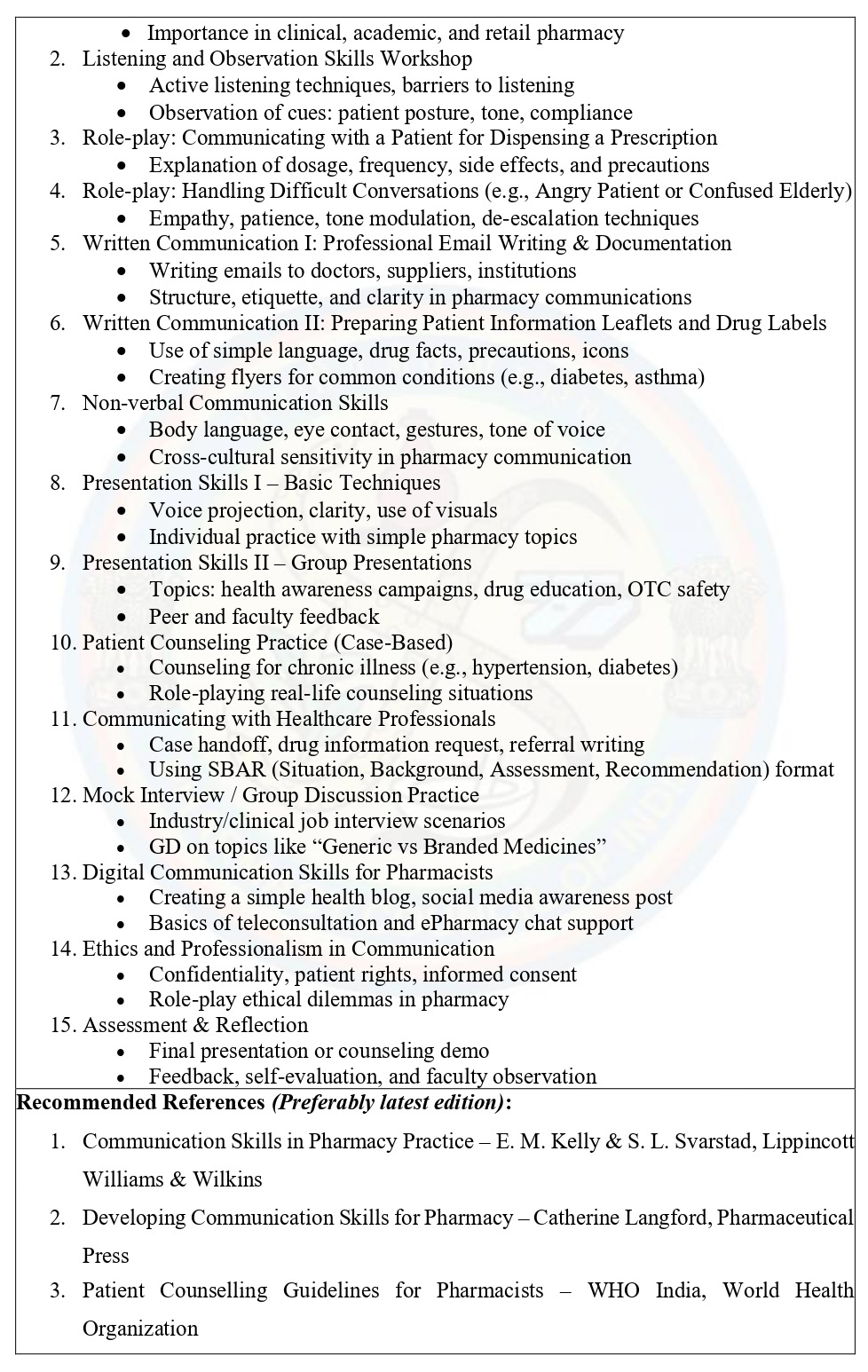
Detailed Syllabus
List of practical
(Perform any 12
Experiments)
1. Introduction to
Communication in Pharmacy
• Types of
communication: verbal, non-verbal, written
• Importance in
clinical, academic, and retail pharmacy
2. Listening and
Observation Skills Workshop
• Active
listening techniques, barriers to listening
• Observation
of cues: patient posture, tone, compliance
3. Role-play:
Communicating with a Patient for Dispensing a Prescription
• Explanation
of dosage, frequency, side effects, and precautions
4. Role-play:
Handling Difficult Conversations (e.g., Angry Patient or Confused Elderly)
• Empathy,
patience, tone modulation, de-escalation techniques
5. Written
Communication I: Professional Email Writing & Documentation
• Writing
emails to doctors, suppliers, institutions
• Structure,
etiquette, and clarity in pharmacy communications
6. Written
Communication II: Preparing Patient Information Leaflets and Drug Labels
• Use of simple
language, drug facts, precautions, icons
• Creating
flyers for common conditions (e.g., diabetes, asthma)
7. Non-verbal
Communication Skills
• Body
language, eye contact, gestures, tone of voice
•
Cross-cultural sensitivity in pharmacy communication
8. Presentation
Skills I – Basic Techniques
• Voice
projection, clarity, use of visuals
• Individual
practice with simple pharmacy topics
9. Presentation
Skills II – Group Presentations
• Topics:
health awareness campaigns, drug education, OTC safety
• Peer and
faculty feedback
10. Patient Counseling
Practice (Case-Based)
• Counseling
for chronic illness (e.g., hypertension, diabetes)
• Role-playing
real-life counseling situations
11. Communicating
with Healthcare Professionals
• Case handoff,
drug information request, referral writing
• Using SBAR
(Situation, Background, Assessment, Recommendation) format
12. Mock Interview /
Group Discussion Practice
•
Industry/clinical job interview scenarios
• GD on topics
like “Generic vs Branded Medicines”
13. Digital
Communication Skills for Pharmacists
• Creating a
simple health blog, social media awareness post
• Basics of
teleconsultation and ePharmacy chat support
14. Ethics and
Professionalism in Communication
•
Confidentiality, patient rights, informed consent
• Role-play
ethical dilemmas in pharmacy
15. Assessment &
Reflection
• Final
presentation or counseling demo
• Feedback,
self-evaluation, and faculty observation
Recommended
References (Preferably latest edition):
1. Communication
Skills in Pharmacy Practice – E. M. Kelly & S. L. Svarstad, Lippincott
Williams & Wilkins
2. Developing
Communication Skills for Pharmacy – Catherine Langford, Pharmaceutical Press
3. PatientCounselling Guidelines for Pharmacists–WHOIndia, World Health Organization