Human Anatomy and Physiology
[ Dpharm (Diploma in Pharmacy) ]
Under Class: | 1st Year (Dpharm) |
Human Anatomy and Physiology - Question Papers, Lecture Notes, Study Material Download PDF
Pharmacy - Dpharm (Diploma in Pharmacy) - 1st Year - Name of Subject: Human Anatomy and Physiology - Lecture Notes, Study Material, Question Papers Download PDF
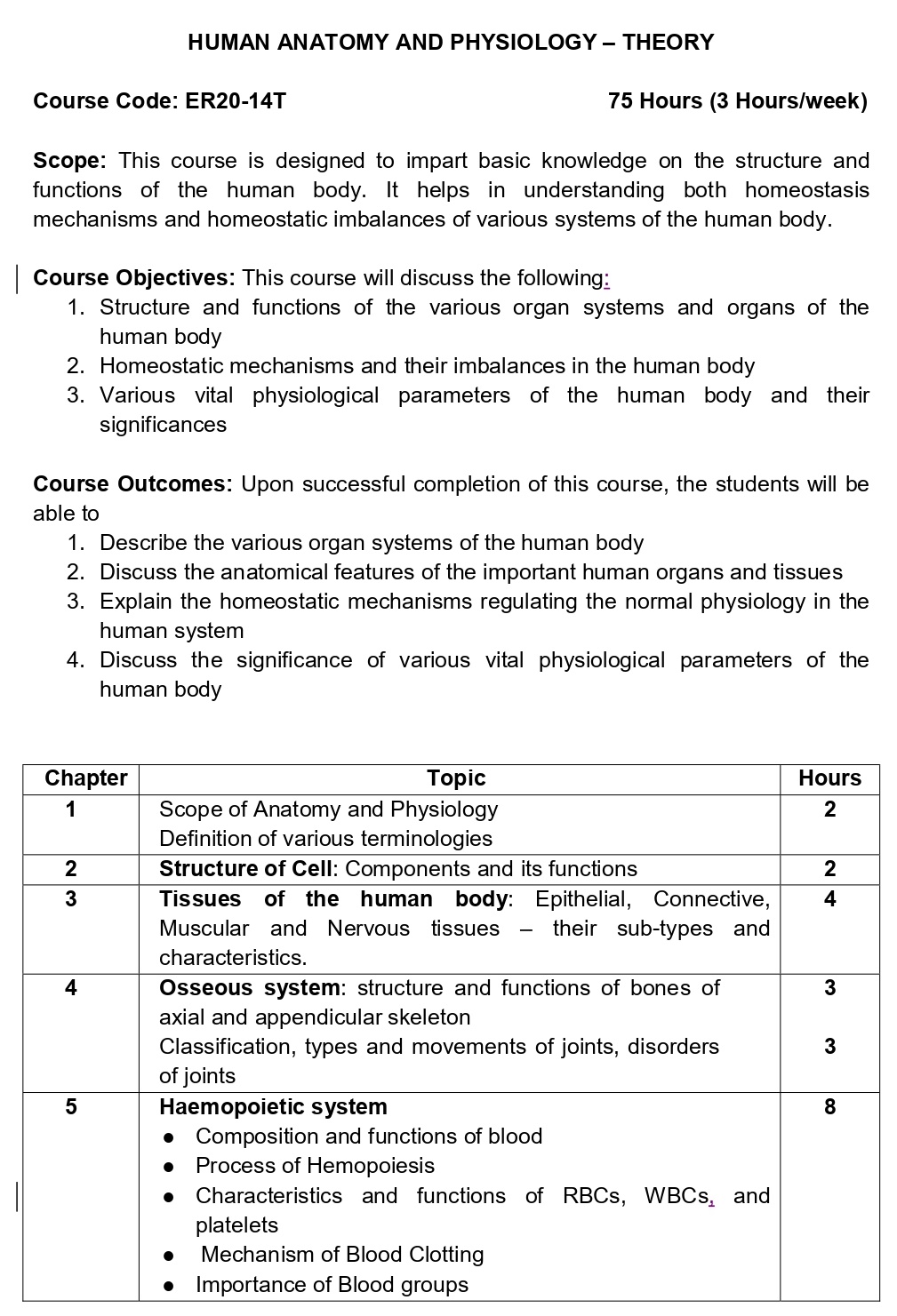
HUMAN ANATOMY AND
PHYSIOLOGY – THEORY
Course Code: ER20-14T
Scope:
This course is designed to impart basic knowledge on the structure and
functions of the human body. It helps in understanding both homeostasis
mechanisms and homeostatic imbalances of various systems of the human body.
Course Objectives:
This course will discuss the following:
1.
Structure and functions of the various organ systems and organs of the human
body
2.
Homeostatic mechanisms and their imbalances in the human body
3.
Various vital physiological parameters of the human body and their
significances
Course Outcomes:
Upon successful completion of this course, the students will be able to
1.
Describe the various organ systems of the human body
2.
Discuss the anatomical features of the important human organs and tissues
3.
Explain the homeostatic mechanisms regulating the normal physiology in the
human system
4.
Discuss the significance of various vital physiological parameters of the human
body
1.
Scope
of Anatomy and Physiology
Definition
of various terminologies
2. Structure of Cell:
Components and its functions
3. Tissues of the
human body: Epithelial, Connective, Muscular and
Nervous tissues – their sub-types and characteristics.
4. Osseous system:
structure and functions of bones of axial and appendicular skeleton
Classification,
types and movements of joints, disorders of joints
5. Haemopoietic
system
•
Composition and functions of blood
•
Process of Hemopoiesis
•
Characteristics and functions of RBCs, WBCs, and platelets
•
Mechanism of Blood Clotting
•
Importance of Blood groups
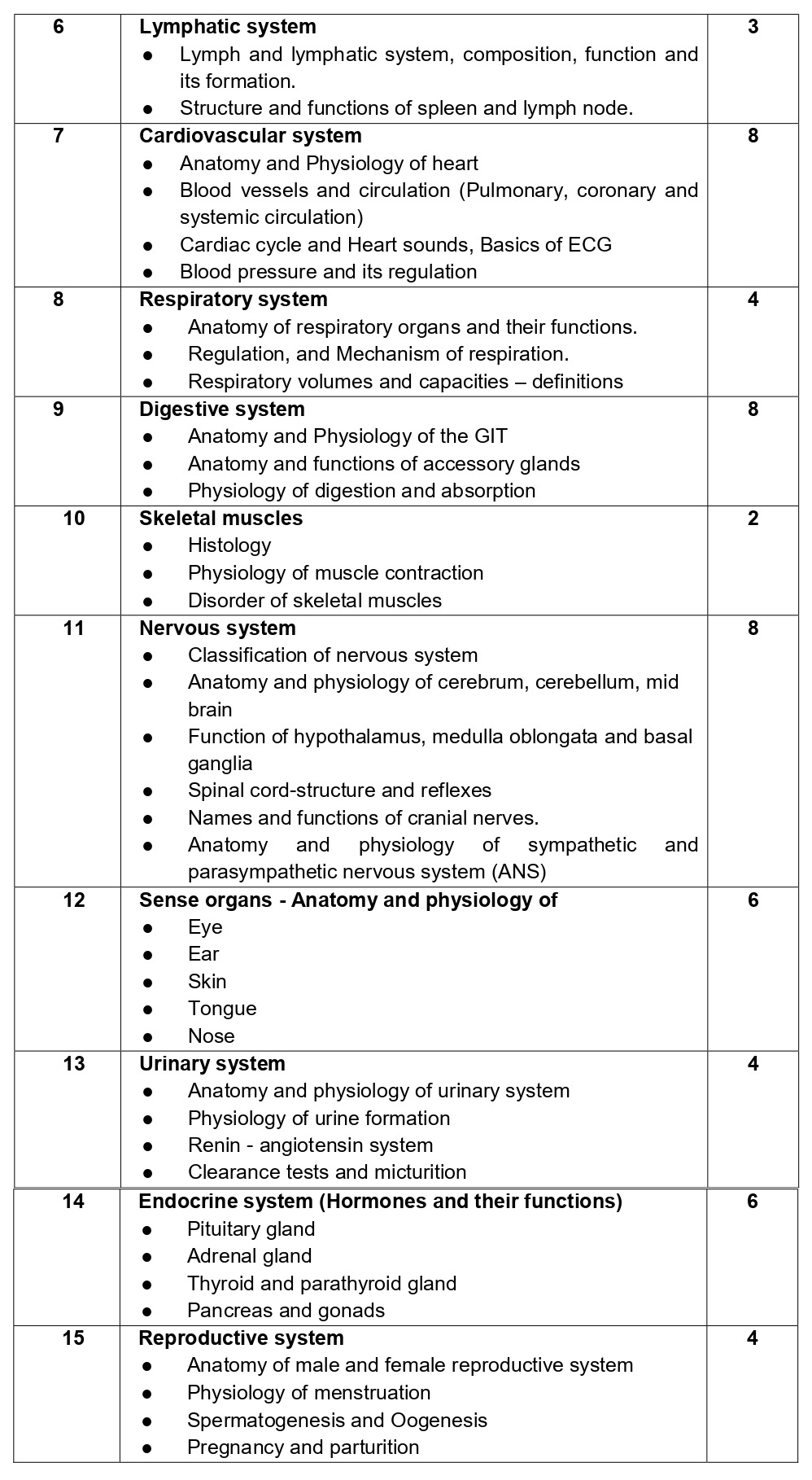
6. Lymphatic system
•
Lymph and lymphatic system, composition, function and its formation.
•
Structure and functions of spleen and lymph node.
7. Cardiovascular
system
•
Anatomy and Physiology of heart
•
Blood vessels and circulation (Pulmonary, coronary and systemic circulation)
•
Cardiac cycle and Heart sounds, Basics of ECG
•
Blood pressure and its regulation
8. Respiratory system
•
Anatomy of respiratory organs and their functions.
•
Regulation, and Mechanism of respiration.
•
Respiratory volumes and capacities – definitions
9. Digestive system
•
Anatomy and Physiology of the GIT
•
Anatomy and functions of accessory glands
•
Physiology of digestion and absorption
10. Skeletal muscles
•
Histology
•
Physiology of muscle contraction
•
Disorder of skeletal muscles
11. Nervous system
•
Classification of nervous system
•
Anatomy and physiology of cerebrum, cerebellum, mid brain
•
Function of hypothalamus, medulla oblongata and basal ganglia
•
Spinal cord-structure and reflexes
•
Names and functions of cranial nerves.
•
Anatomy and physiology of sympathetic and parasympathetic nervous system (ANS)
12. Sense organs -
Anatomy and physiology of
•
Eye
•
Ear
•
Skin
•
Tongue
•
Nose
13. Urinary system
•
Anatomy and physiology of urinary system
•
Physiology of urine formation
•
Renin - angiotensin system
•
Clearance tests and micturition
14. Endocrine system
(Hormones and their functions)
•
Pituitary gland
•
Adrenal gland
•
Thyroid and parathyroid gland
•
Pancreas and gonads
15. Reproductive
system
•
Anatomy of male and female reproductive system
•
Physiology of menstruation
•
Spermatogenesis and Oogenesis
•
Pregnancy and parturition 4