Pharmacognosy
[ Dpharm (Diploma in Pharmacy) ]
Under Class: | 1st Year (Dpharm) |
Pharmacognosy - Question Papers, Lecture Notes, Study Material Download PDF
Pharmacy - Dpharm (Diploma in Pharmacy) - 1st Year - Name of Subject: Pharmacognosy - Lecture Notes, Study Material, Question Papers Download PDF
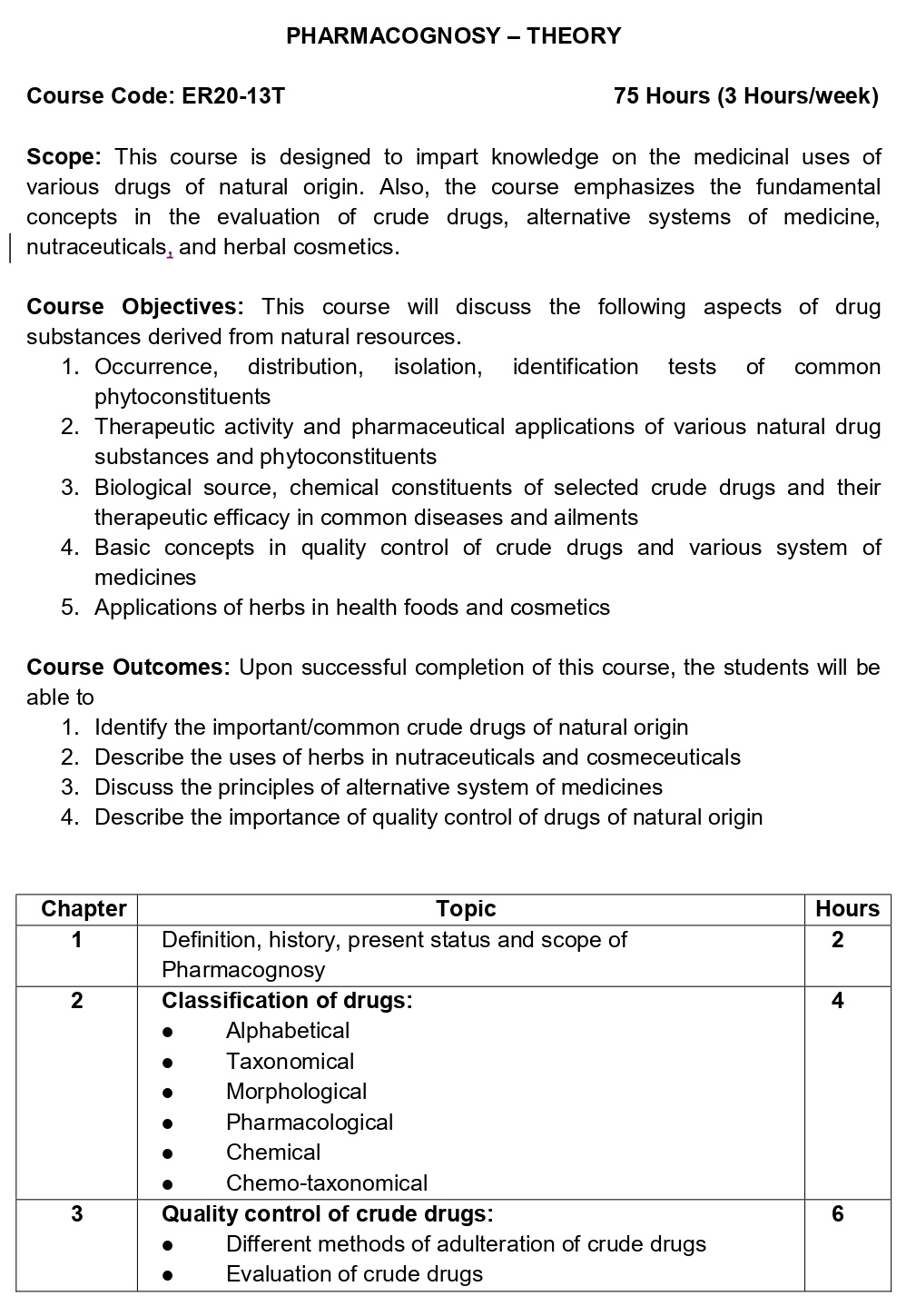
PHARMACOGNOSY –
THEORY
Course Code:
ER20-13T
Scope: This
course is designed to impart knowledge on the medicinal uses of various drugs
of natural origin. Also, the course emphasizes the fundamental concepts in the
evaluation of crude drugs, alternative systems of medicine, nutraceuticals, and
herbal cosmetics.
Course Objectives:
This course will discuss the following aspects of drug substances derived from
natural resources.
1.
Occurrence, distribution, isolation, identification tests of common
phytoconstituents
2.
Therapeutic activity and pharmaceutical applications of various natural drug
substances and phytoconstituents
3.
Biological source, chemical constituents of selected crude drugs and their
therapeutic efficacy in common diseases and ailments
4.
Basic concepts in quality control of crude drugs and various system of
medicines
5.
Applications of herbs in health foods and cosmetics
Course Outcomes:
Upon successful completion of this course, the students will be able to
1.
Identify the important/common crude drugs of natural origin
2.
Describe the uses of herbs in nutraceuticals and cosmeceuticals
3.
Discuss the principles of alternative system of medicines
4.
Describe the importance of quality control of drugs of natural origin
1.
Definition,
history, present status and scope of Pharmacognosy
2.
Classification of
drugs:
•
Alphabetical
•
Taxonomical
•
Morphological
•
Pharmacological
•
Chemical
•
Chemo-taxonomical
3.
Quality control of
crude drugs:
•
Different methods of adulteration of crude drugs
•
Evaluation of crude drugs
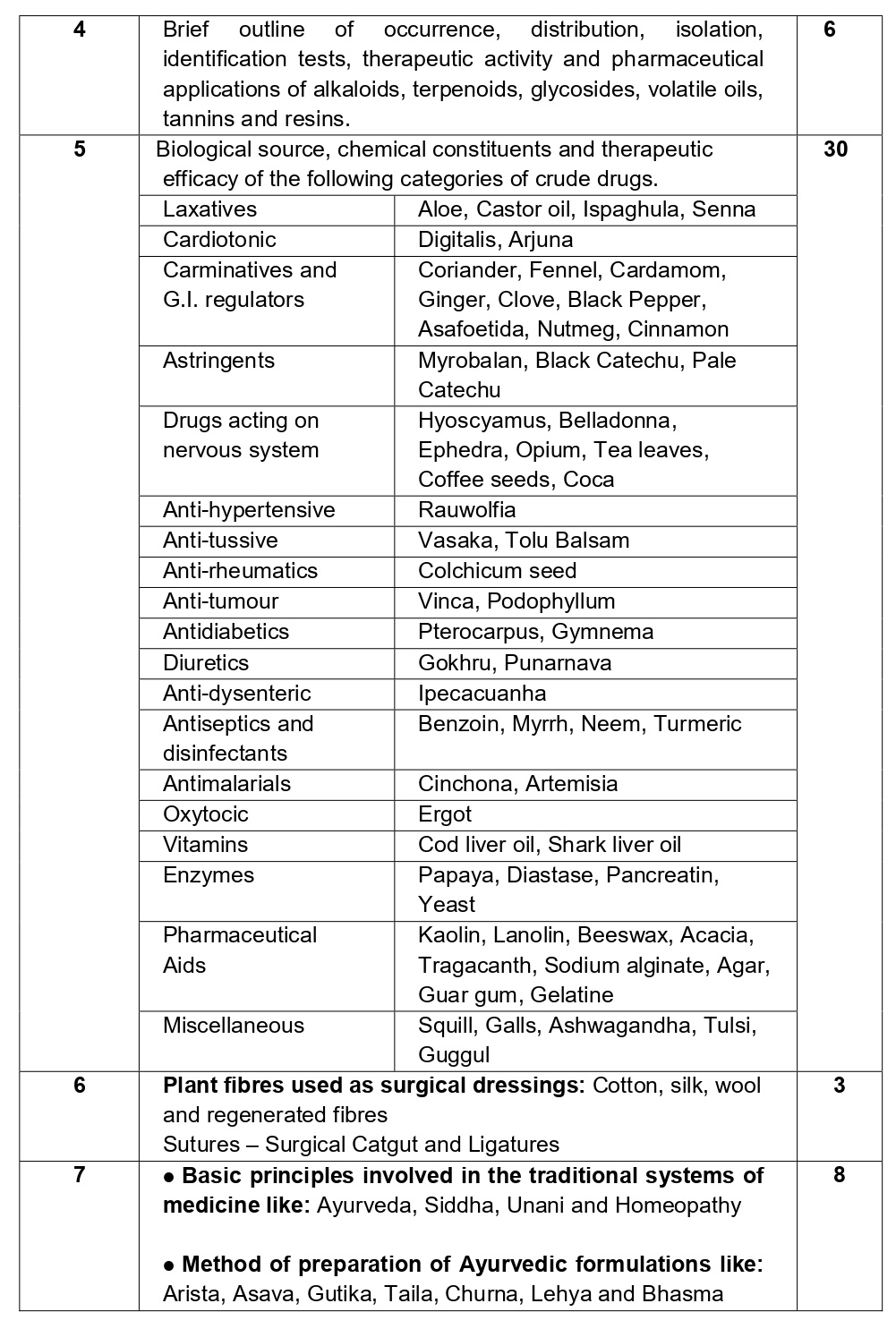
4.
Brief
outline of occurrence, distribution, isolation, identification tests,
therapeutic activity and pharmaceutical applications of alkaloids, terpenoids,
glycosides, volatile oils, tannins and resins.
5.
Biological
source, chemical constituents and therapeutic efficacy of the following
categories of crude drugs.
Laxatives:
Aloe, Castor oil, Ispaghula, Senna
Cardiotonic:
Digitalis, Arjuna
Carminatives
and G.I. regulators: Coriander, Fennel, Cardamom, Ginger, Clove, Black Pepper,
Asafoetida, Nutmeg, Cinnamon
Astringents:
Myrobalan, Black Catechu, Pale Catechu
Drugs
acting on nervous system: Hyoscyamus, Belladonna, Ephedra, Opium, Tea leaves,
Coffee seeds, Coca
Anti-hypertensive: Rauwolfia
Anti-tussive: Vasaka, Tolu Balsam
Anti-rheumatics: Colchicum seed
Anti-tumour: Vinca, Podophyllum
Antidiabetics: Pterocarpus, Gymnema
Diuretics: Gokhru, Punarnava
Anti-dysenteric: Ipecacuanha
Antiseptics and disinfectants : Benzoin,
Myrrh, Neem, Turmeric
Antimalarials: Cinchona, Artemisia
Oxytocic: Ergot
Vitamins: Cod liver oil, Shark liver oil
Enzymes: Papaya, Diastase, Pancreatin, Yeast
Pharmaceutical Aids: Kaolin, Lanolin, Beeswax,
Acacia, Tragacanth, Sodium alginate, Agar, Guar gum, Gelatine
Miscellaneous: Squill, Galls, Ashwagandha,
Tulsi, Guggul
6.
Plant fibres used as
surgical dressings: Cotton, silk, wool and regenerated
fibres
Sutures
– Surgical Catgut and Ligatures
7.
• Basic principles
involved in the traditional systems of medicine like:
Ayurveda, Siddha, Unani and Homeopathy
• Method of
preparation of Ayurvedic formulations like:
Arista,
Asava, Gutika, Taila, Churna, Lehya and Bhasma 8
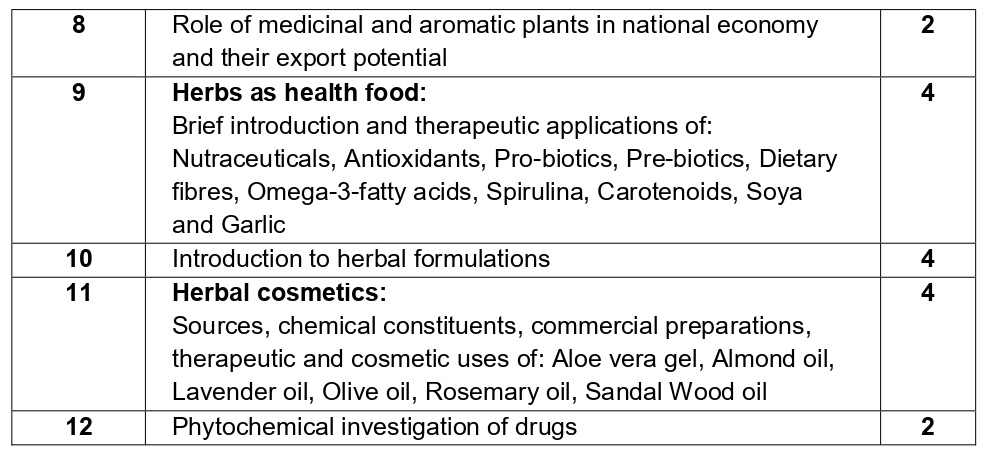
8.
Role
of medicinal and aromatic plants in national economy and their export potential
9.
Herbs as health food:
Brief
introduction and therapeutic applications of: Nutraceuticals, Antioxidants,
Pro-biotics, Pre-biotics, Dietary fibres, Omega-3-fatty acids, Spirulina,
Carotenoids, Soya and Garlic
10.
Introduction to herbal formulations 4
11. Herbal cosmetics:
Sources,
chemical constituents, commercial preparations, therapeutic and cosmetic uses
of: Aloe vera gel, Almond oil, Lavender oil, Olive oil, Rosemary oil, Sandal
Wood oil
12.
Phytochemical investigation of drugs