Pharmacology
[ Dpharm (Diploma in Pharmacy) ]
Under Class: | 2nd Year (Dpharm) |
Pharmacology - Question Papers, Lecture Notes, Study Material Download PDF
Pharmacy - Dpharm (Diploma in Pharmacy) - 2nd Year - Name of Subject: Pharmacology - Lecture Notes, Study Material, Question Papers Download PDF
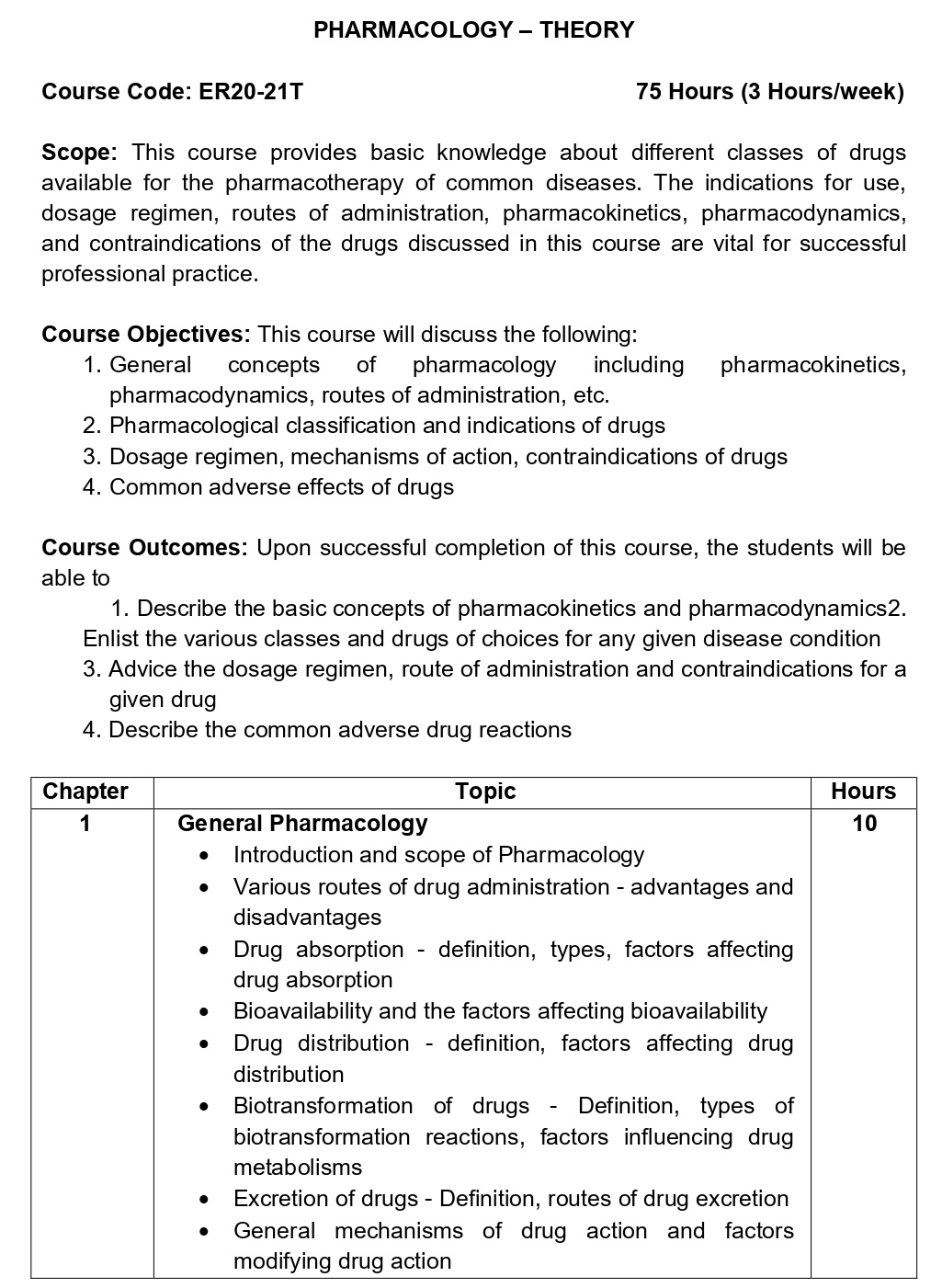
PHARMACOLOGY – THEORY
Course Code: ER20-21T
Scope:
This course provides basic knowledge about different classes of drugs available
for the pharmacotherapy of common diseases. The indications for use, dosage
regimen, routes of administration, pharmacokinetics, pharmacodynamics, and
contraindications of the drugs discussed in this course are vital for
successful professional practice.
Course Objectives:
This course will discuss the following:
1.
General concepts of pharmacology including pharmacokinetics, pharmacodynamics,
routes of administration, etc.
2.
Pharmacological classification and indications of drugs
3.
Dosage regimen, mechanisms of action, contraindications of drugs
4.
Common adverse effects of drugs
Course Outcomes:
Upon successful completion of this course, the students will be able to
1.
Describe the basic concepts of pharmacokinetics and pharmacodynamics
2.
Enlist the various classes and drugs of choices for any given disease condition
3.
Advice the dosage regimen, route of administration and contraindications for a
given drug
4.
Describe the common adverse drug reactions
1. General
Pharmacology
•
Introduction and scope of Pharmacology
•
Various routes of drug administration - advantages and disadvantages
•
Drug absorption - definition, types, factors affecting drug absorption
•
Bioavailability and the factors affecting bioavailability
•
Drug distribution - definition, factors affecting drug distribution
•
Biotransformation of drugs - Definition, types of biotransformation reactions,
factors influencing drug metabolisms
•
Excretion of drugs - Definition, routes of drug excretion
•
General mechanisms of drug action and factors modifying drug action
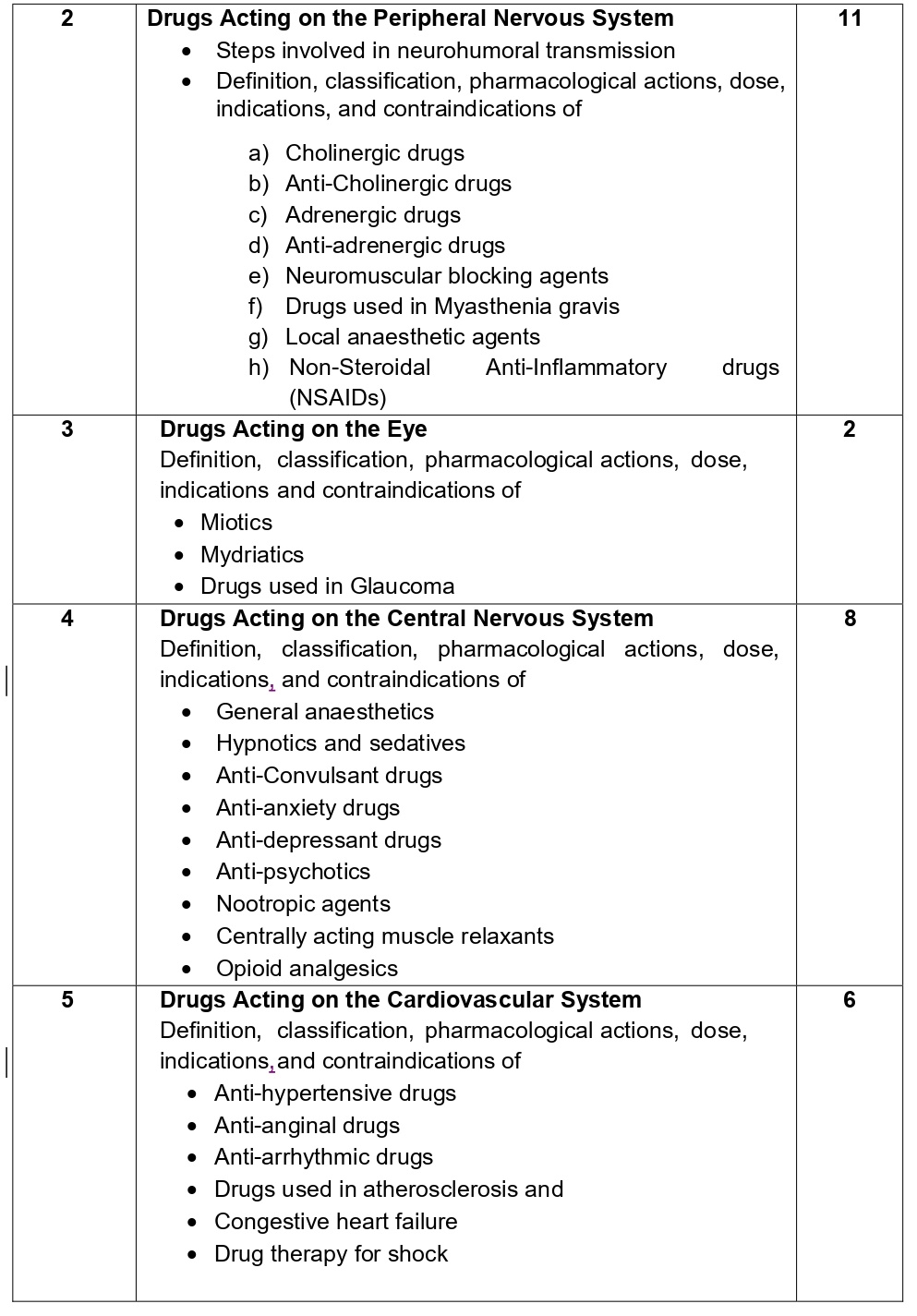
2. Drugs Acting on
the Peripheral Nervous System
•
Steps involved in neurohumoral transmission
•
Definition, classification, pharmacological actions, dose, indications, and
contraindications of
a)
Cholinergic drugs
b)
Anti-Cholinergic drugs
c)
Adrenergic drugs
d)
Anti-adrenergic drugs
e)
Neuromuscular blocking agents
f)
Drugs used in Myasthenia gravis
g)
Local anaesthetic agents
h)
Non-Steroidal Anti-Inflammatory drugs (NSAIDs)
3. Drugs Acting on
the Eye
Definition,
classification, pharmacological actions, dose, indications and
contraindications of
•
Miotics
•
Mydriatics
•
Drugs used in Glaucoma
4. Drugs Acting on
the Central Nervous System
Definition,
classification, pharmacological actions, dose, indications, and contraindications
of
•
General anaesthetics
•
Hypnotics and sedatives
•
Anti-Convulsant drugs
•
Anti-anxiety drugs
•
Anti-depressant drugs
•
Anti-psychotics
•
Nootropic agents
•
Centrally acting muscle relaxants
•
Opioid analgesics
5. Drugs Acting on
the Cardiovascular System
Definition,
classification, pharmacological actions, dose, indications, and
contraindications of
•
Anti-hypertensive drugs
•
Anti-anginal drugs
•
Anti-arrhythmic drugs
•
Drugs used in atherosclerosis and
•
Congestive heart failure
•
Drug therapy for shock
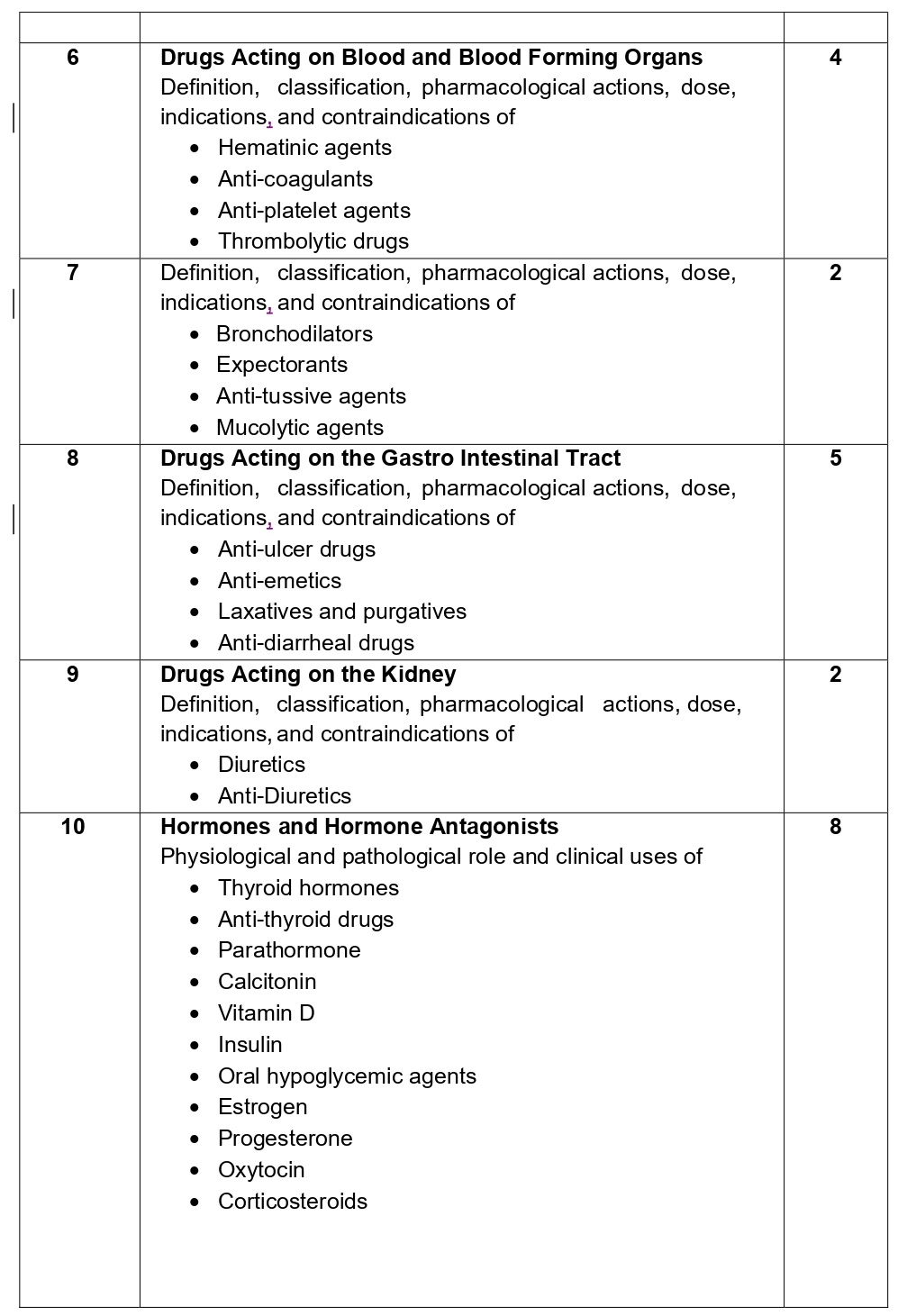
6. Drugs Acting on
Blood and Blood Forming Organs
Definition,
classification, pharmacological actions, dose, indications, and
contraindications of
•
Hematinic agents
•
Anti-coagulants
•
Anti-platelet agents
•
Thrombolytic drugs
7. Definition,
classification, pharmacological actions, dose, indications, and
contraindications of
•
Bronchodilators
•
Expectorants
•
Anti-tussive agents
•
Mucolytic agents
8. Drugs Acting on
the Gastro Intestinal Tract
Definition,
classification, pharmacological actions, dose, indications, and
contraindications of
•
Anti-ulcer drugs
•
Anti-emetics
•
Laxatives and purgatives
•
Anti-diarrheal drugs
9. Drugs Acting on
the Kidney
Definition,
classification, pharmacological actions, dose, indications, and contraindications
of
•
Diuretics
•
Anti-Diuretics
10. Hormones and
Hormone Antagonists
Physiological
and pathological role and clinical uses of
•
Thyroid hormones
•
Anti-thyroid drugs
•
Parathormone
•
Calcitonin
•
Vitamin D
•
Insulin
•
Oral hypoglycemic agents
•
Estrogen
•
Progesterone
•
Oxytocin
•
Corticosteroids
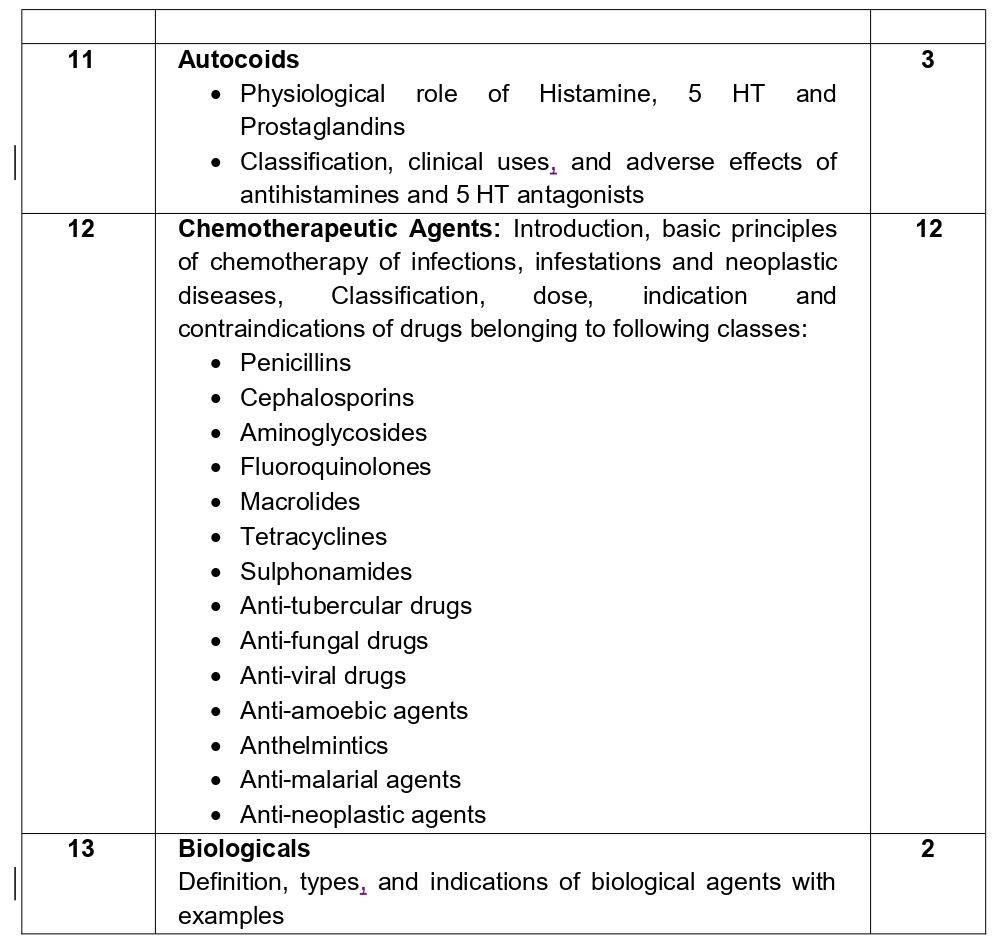
11. Autocoids
•
Physiological role of Histamine, 5 HT and Prostaglandins
•
Classification, clinical uses, and adverse effects of antihistamines and 5 HT
antagonists
12. Chemotherapeutic
Agents: Introduction, basic principles of chemotherapy of
infections, infestations and neoplastic diseases, Classification, dose,
indication and contraindications of drugs belonging to following classes:
•
Penicillins
•
Cephalosporins
•
Aminoglycosides
•
Fluoroquinolones
•
Macrolides
•
Tetracyclines
•
Sulphonamides
•
Anti-tubercular drugs
•
Anti-fungal drugs
•
Anti-viral drugs
•
Anti-amoebic agents
•
Anthelmintics
•
Anti-malarial agents
•
Anti-neoplastic agents 12
13. Biologicals
Definition,
types, and indications of biological agents with examples