Social Pharmacy
[ Dpharm (Diploma in Pharmacy) ]
Under Class: | 1st Year (Dpharm) |
Social Pharmacy - Question Papers, Lecture Notes, Study Material Download PDF
Pharmacy - Dpharm (Diploma in Pharmacy) - 1st Year - Name of Subject: Social Pharmacy - Lecture Notes, Study Material, Question Papers Download PDF
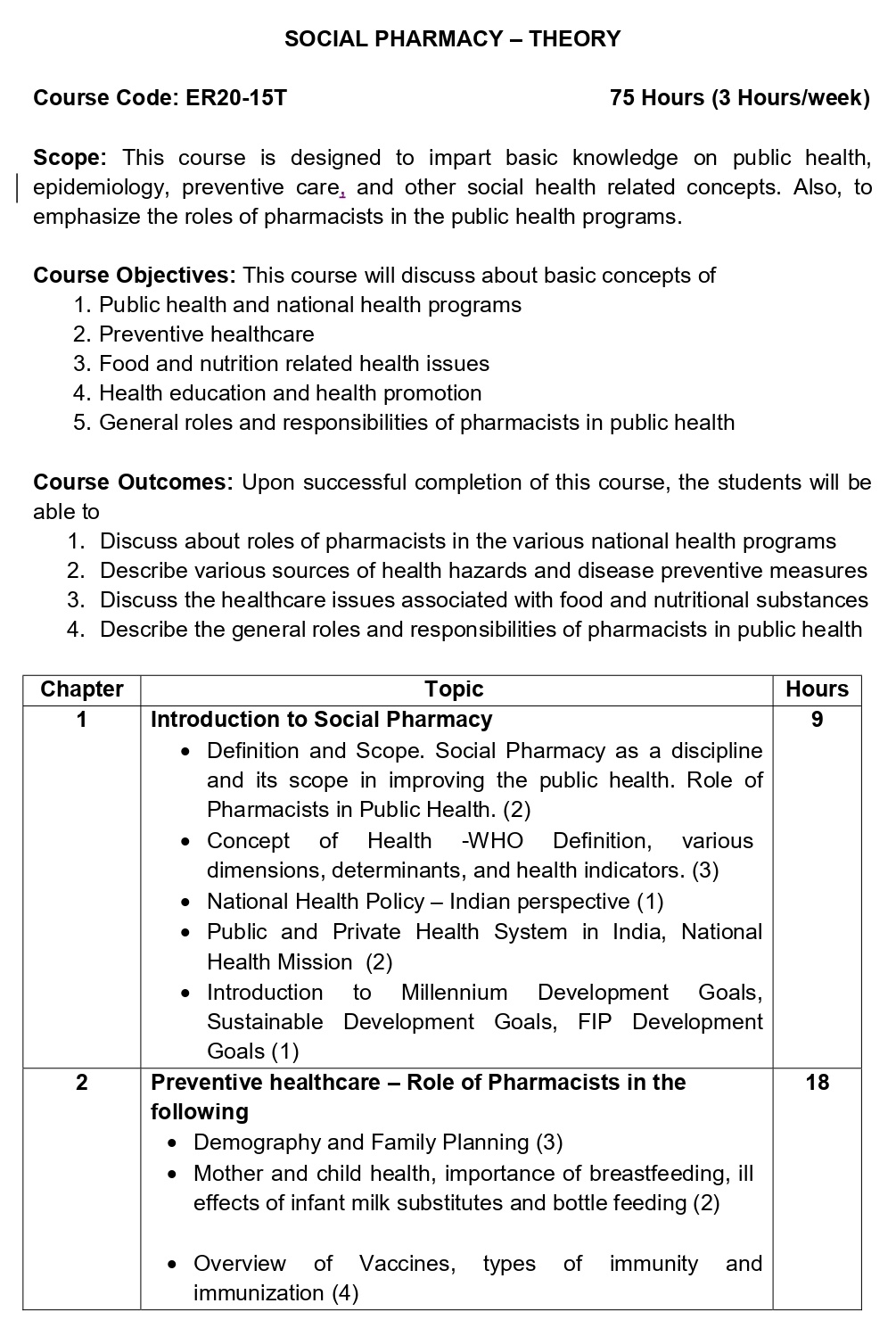
SOCIAL PHARMACY –
THEORY
Course Code: ER20-15T
Scope:
This course is designed to impart basic knowledge on public health, epidemiology,
preventive care, and other social health related concepts. Also, to emphasize
the roles of pharmacists in the public health programs.
Course Objectives:
This course will discuss about basic concepts of
1.
Public health and national health programs
2.
Preventive healthcare
3.
Food and nutrition related health issues
4.
Health education and health promotion
5.
General roles and responsibilities of pharmacists in public health
Course Outcomes:
Upon successful completion of this course, the students will be able to
1.
Discuss about roles of pharmacists in the various national health programs
2.
Describe various sources of health hazards and disease preventive measures
3.
Discuss the healthcare issues associated with food and nutritional substances
4.
Describe the general roles and responsibilities of pharmacists in public health
1. Introduction to
Social Pharmacy
•
Definition and Scope. Social Pharmacy as a discipline and its scope in
improving the public health. Role of Pharmacists in Public Health. (2)
•
Concept of Health -WHO Definition, various dimensions, determinants, and health
indicators. (3)
•
National Health Policy – Indian perspective (1)
•
Public and Private Health System in India, National Health Mission (2)
•
Introduction to Millennium Development Goals,
Sustainable
Development Goals, FIP Development Goals (1)
2. Preventive
healthcare – Role of Pharmacists in the following
•
Demography and Family Planning (3)
•
Mother and child health, importance of breastfeeding, ill effects of infant
milk substitutes and bottle feeding (2)
•
Overview of Vaccines, types of immunity and immunization (4)
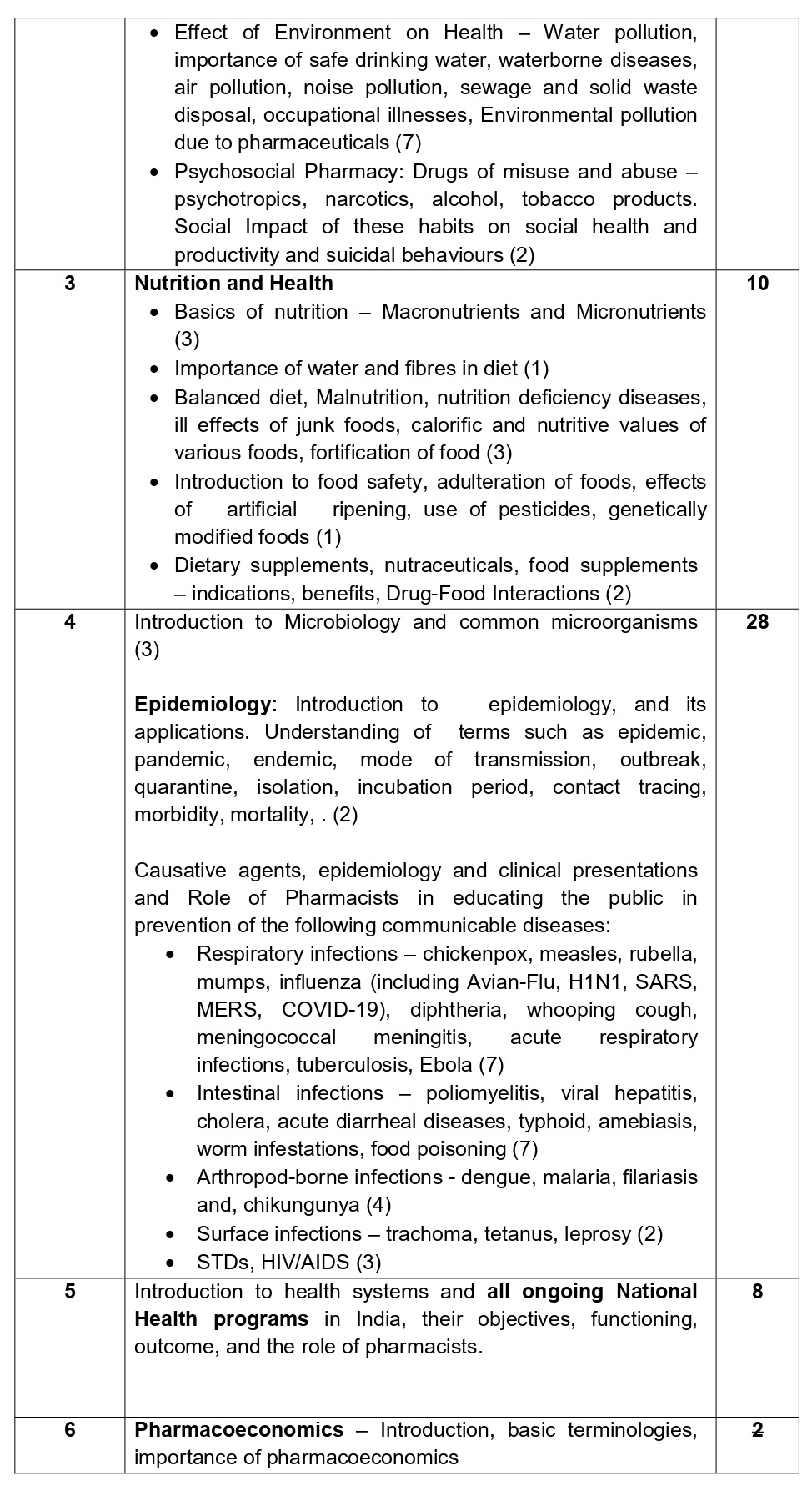
•
Effect of Environment on Health – Water pollution, importance of safe drinking
water, waterborne diseases, air pollution, noise pollution, sewage and solid
waste disposal, occupational illnesses, Environmental pollution due to
pharmaceuticals (7)
•
Psychosocial Pharmacy: Drugs of misuse and abuse – psychotropics, narcotics,
alcohol, tobacco products. Social Impact of these habits on social health and productivity
and suicidal behaviours (2)
3. Nutrition and
Health
•
Basics of nutrition – Macronutrients and Micronutrients (3)
•
Importance of water and fibres in diet (1)
•
Balanced diet, Malnutrition, nutrition deficiency diseases, ill effects of junk
foods, calorific and nutritive values of various foods, fortification of food
(3)
•
Introduction to food safety, adulteration of foods, effects of artificial
ripening, use of pesticides, genetically modified foods (1)
•
Dietary supplements, nutraceuticals, food supplements – indications, benefits,
Drug-Food Interactions (2)
4. Introduction
to Microbiology and common microorganisms (3)
Epidemiology:
Introduction to epidemiology, and its applications. Understanding of terms such
as epidemic, pandemic, endemic, mode of transmission, outbreak, quarantine,
isolation, incubation period, contact tracing, morbidity, mortality, . (2)
Causative
agents, epidemiology and clinical presentations and Role of Pharmacists in
educating the public in prevention of the following communicable diseases:
•
Respiratory infections – chickenpox, measles, rubella, mumps, influenza
(including Avian-Flu, H1N1, SARS, MERS, COVID-19), diphtheria, whooping cough,
meningococcal meningitis, acute respiratory infections, tuberculosis, Ebola (7)
•
Intestinal infections – poliomyelitis, viral hepatitis, cholera, acute
diarrheal diseases, typhoid, amebiasis, worm infestations, food poisoning (7)
•
Arthropod-borne infections - dengue, malaria, filariasis and, chikungunya (4)
•
Surface infections – trachoma, tetanus, leprosy (2)
•
STDs, HIV/AIDS (3)
5. Introduction
to health systems and all ongoing
National Health programs in India, their objectives, functioning, outcome,
and the role of pharmacists.
6. Pharmacoeconomics –
Introduction, basic terminologies, importance of pharmacoeconomics