Biochemistry - Practical
[ Bpharm (Bachelor of Pharmacy) ]
Under Class: | 2nd Semester (Bpharm) |
Biochemistry - Practical - Experimental laboratory pdf record
Pharmacy - Bachelor of Pharmacy (Bpharm) - 2nd Semester - 1st Year - Subject/Practical Laboratory: Biochemistry - Practical (BP207P) - laboratory Experimental Note Download PDF
• Preparation of Starch From Potatoes
• Preparation of Casein From Milk
• Estimation of Protein (Biuret Method) - Colorimetric Estimation
• Estimation of Glucose (Orthotoluidine method)
• Estimation of Calcium (Titrimetric Method)
• Determination of Blood Grouping
Biochemistry
Biochemistry and the Organization of Cells:
• How does biochemistry describe life processes?
• How did living things originate?
• Chemical Foundations of Biochemistry
• How and when did the Earth come to be?
• How were biomolecules likely to have formed on the early Earth?
• Molecules to Cells: Which came first - the catalysts or the hereditary molecules?
• The Biggest Biological Distinction-Prokaryotes and Eukaryotes
• How is prokaryotic DNA organized without a nucleus?
• Eukaryotic Cells
• Five Kingdoms, Three Domains
• Extremophiles: The Toast of the Industry
• Common Ground for All Cells
• Did eukaryotes develop from prokaryotes?
• Did symbiosis play a role in the development of eukaryotes?
• Biochemical Energetics
• Energy and Change: What kinds of energy changes take place in living cells?
• Spontaneity in Biochemical Reactions
• Life and Thermodynamics
• Predicting Reactions
Water The Solvent for Biochemical Reactions:
• Water and Polarity
• What is polarity?
• Solvent Properties of Water
• Hydrogen Bonds
• Acids, Bases, and pH
• Titration Curves
• Buffers
• How do buffers work?
• How do we choose a buffer?
• How do we make buffers in the laboratory?
• Are naturally occurring pH buffers present in living organisms?
Amino Acids and Peptides:
• Amino Acids Exist in a Three-Dimensional World
• Individual Amino Acids:Their Structures and Properties
• Uncommon Amino Acids
• Amino Acids to Calm Down and Pep Up
• Amino Acids Can Act as Both Acids and Bases
• The Peptide Bond
• Small Peptides with Physiological Activity
• Phenylketonuria-Little Molecules Have Big Effects
• Peptide Hormones-More Small Molecules with Big Effects
• Amino Acids Go Many Different Places
The Three Dimensional Structure of Proteins:
• Protein Structure and Function
• Primary Structure of Proteins
• Secondary Structure of Proteins
• Complete Proteins and Nutrition
• Periodic Structures in Protein Backbones
• Secondary Structure of Proteins: Irregularities in Regular Structures
• Supersecondary Structures and Domains of Proteins
• The Collagen Triple Helix
• Two Types of Protein Conformations: Fibrous and Globular
• Tertiary Structure of Proteins
• Forces Involved in Tertiary Structures
• Myoglobin: An Example of Protein Structure
• Denaturation and Refolding
• Quaternary Structure of Proteins
• Protein Folding Dynamics
• Hydrophobic Interactions:A Case Study in Thermodynamics
• Protein Folding Dynamics: The Importance of Correct Folding
• Protein-Folding Chaperones
• Prions and Disease
Protein Purification and Characterization Techniques:
• Extracting Pure Proteins from Cells
• Column Chromatography
• What are the different types of chromatography?
• Electrophoresis
• Determining the Primary Structure of a Protein
• Cleavage of the Protein into Peptides
• Sequencing of Peptides: The Edman Method
• Protein Purification: Pulling It All Together
The Behavior of Proteins Enzymes:
• Enzymes Are Effective Biological Catalysts
• Kinetics versus Thermodynamics
• Enzymes as Markers for Disease
• Enzyme Kinetic Equations
• Enzyme-Substrate Binding
• Examples of Enzyme-Catalyzed Reactions
• The Michaelis�Menten Approachto Enzyme Kinetics
• Enzyme Inhibition
• Practical Information from Kinetic Data
• Enzyme Inhibition in the Treatment of AIDS
The Behavior of Proteins Enzymes Mechanisms and Control:
• The Behavior of Allosteric Enzymes
• The Concerted and Sequential Models for Allosteric Enzymes
• Control of Enzyme Activity by Phosphorylation
• Zymogens
• The Nature of the Active Site
• Chemical Reactions Involved in Enzyme Mechanisms
• The Active Site and Transition States
• Families of Enzymes: Proteases
• Coenzymes
• Catalytic Antibodies against Cocaine
• Catalysts for Green Chemistry
Lipids and Proteins Are Associated in Biological Membranes:
• The Definition of a Lipid
• The Chemical Natures of the Lipid Types
• What are fatty acids?
• What are triacylglycerols?
• What are phosphoacylglycerols?
• What are waxes and sphingolipids?
• What are glycolipids?
• What are steroids?
• Biological Membranes
• What is the structure of lipid bilayers?
• How does the composition of the bilayer affect its properties?
• Butter versus Margarine-Which Is Healthier?
• The Kinds of Membrane Proteins
• The Fluid-Mosaic Model of Membrane Structure
• Membranes in Drug Delivery
• The Functions of Biological Membranes
• Lipid Droplets Are Not Just Great Balls of Fat
• Lipid-Soluble Vitamins and Their Functions
• Vision Has Great Chemistry
• Prostaglandins and Leukotrienes
• Why Should We Eat More Salmon?
Nucleic Acids How Structure Conveys Information:
• Levels of Structure in Nucleic Acids
• The Covalent Structure of Polynucleotides
• The DNA Family Tree
• The Structure of DNA
• What is the nature of the DNA double helix?
• Are there other possible conformations of the double helix?
• How does prokaryotic DNA supercoil into its tertiary structure?
• How does supercoiling take place in eukaryotic DNA?
• What Makes a Triple Helix Useful in Drug Design?
• Denaturation of DNA
• The Principal Kinds of RNA and Their Structures
• What kinds of RNA play a role in life processes?
• What is the role of transfer RNA in protein synthesis?
• How does ribosomal RNA combine with proteins to form the site of protein synthesis?
• The Human Genome Project: Treasure or Pandora�s Box?
• Why Identical Twins Are Not Identical
Biosynthesis of Nucleic Acids Replication:
• The Flow of Genetic Information in the Cell
• Replication of DNA
• DNA Polymerase
• Semidiscontinuous DNA Replication
• DNA Polymerase from E. coli
• Proteins Required for DNA Replication
• Proofreading and Repair
• Why Does DNA Contain Thymine and Not Uracil?
• Eukaryotic DNA Replication
• The SOS Response in E. coli
• Telomerase and Cancer
Transcription of the Genetic Code The Biosynthesis of RNA:
• Transcription of the Genetic Code
• Transcription in Prokaryotes
• Transcription Regulation in Prokaryotes
• Transcription in Eukaryotes
• Transcription Regulation in Eukaryotes
• Structural Motifs in DNA-Binding Proteins
• Post transcriptional RNA Modification
• Lupus: An Autoimmune Disease Involving RNA Processing
• Ribozymes
• What are the characteristics of a ribozyme?
• Proofreading in Transcription? RNA Fills In Another Missing Piece
Protein Synthesis Translation of the Genetic Message:
• Translating the Genetic Message
• The Genetic Code
• Codon�Anticodon Pairing and Wobble
• Amino Acid Activation
• Prokaryotic Translation
• Eukaryotic Translation
• Posttranslational Modification of Proteins
• Protein Degradation
• Chaperones: Preventing Unsuitable Associations
• Silent Mutations Are Not Always Silent
• How Do We Adapt to High Altitude?
Nucleic Acid Biotechnology:
• Purification and Detection of Nucleic Acids
• Restriction Endonucleases
• Cloning
• What is cloning?
• What are plasmids?
• Genetic Engineering
• Genetic Engineering in Agriculture
• Human Proteins through Genetic Recombination Techniques
• Fusion Proteins and Fast Purifications
• DNA Libraries
• The Polymerase Chain Reaction
• DNA Fingerprinting
• CSI: Biochemistry - Forensic Uses of DNA Testing
• Sequencing DNA
• RNA Interference - The Newest Way to Study Genes
• Genomics and Proteomics
Viruses Cancer and Immunology:
• Viruses
• What is the structure of a virus?
• Families of Viruses
• Virus Life Cycles
• Why are viruses important?
• Retroviruses
• Why are retroviruses important?
• Viruses are Used for Gene Therapy
• The Immune System
• Innate Immunity-The Front Lines of Defense
• Acquired Immunity: Cellular Aspects
• T-Cell Functions
• T-Cell Memory
• The Immune System: Molecular Aspects
• The Immune System: Distinguishing Self from Nonself
• Viral RNAs Outwit the Immune System
• Cancer
• Oncogenes
• Tumor Suppressors
• Viruses and Cancer
• Viruses Helping Cure Cancer
• Attacking the Symptoms instead of the Disease?
The Importance of Energy Changes and Electron Transfer in Metabolism:
• Standard States for Free-Energy Changes
• A Modified Standard State for Biochemical Applications
• Living Things Need Energy-How Do They Use It?
• The Nature of Metabolism
• Living Things Are Unique Thermodynamic Systems
• The Role of Oxidation and Reduction in Metabolism
• Coenzymes in Biologically Important Oxidation-Reduction Reactions
• Coupling of Production and Use of Energy
• Coenzyme A in Activation of Metabolic Pathways
Carbohydrates:
• Sugars: Their Structures and Stereochemistry
• What is unique about the structures of sugars?
• What happens if a sugar forms a cyclic molecule?
• Reactions of Monosaccharides
• Vitamin C Is Related to Sugars
• Some Important Oligosaccharides
• Fruits, Flowers, Striking Colors, and Medicinal Uses Too
• Lactose Intolerance: Why Do So Many People Not Want to Drink Milk?
• Structures and Functions of Polysaccharides
• Why Is Dietary Fiber So Good for You?
• Glycoproteins
• Low-Carbohydrate Diets
• Glycoproteins and Blood Transfusions
Glycolysis:
• The Overall Pathway of Glycolysis
• Biofuels from Fermentation
• Conversion of Six-Carbon Glucose toThree-Carbon Glyceraldehyde-3-Phosphate
• Glyceraldehyde-3-Phosphate Is Converted to Pyruvate
• Anaerobic Metabolism of Pyruvate
• What Is the Connection between Anaerobic Metabolism and Dental Plaque?
• Fetal Alcohol Syndrome
• Energy Production in Glycolysis
Storage Mechanisms and Control in Carbohydrate Metabolism:
• How Glycogen Is Produced and Degraded
• How does the breakdown of glycogen take place?
• How is glycogen formed from glucose?
• How is glycogen metabolism controlled?
• Why Do Athletes Go In for Glycogen Loading?
• Gluconeogenesis Produces Glucose from Pyruvate
• Control of Carbohydrate Metabolism
• Glucose Is Sometimes Diverted throughthe Pentose Phosphate Pathway
• The Pentose Phosphate Pathway and Hemolytic Anemia
The Citric Acid Cycle:
• The Central Role of the Citric Acid Cycle in Metabolism
• The Overall Pathway of the Citric Acid Cycle
• How Pyruvate Is Converted to Acetyl-CoA
• The Individual Reactions of the Citric Acid Cycle
• Plant Poisons and the Citric Acid Cycle
• Energetics and Control of the Citric Acid Cycle
• The Glyoxylate Cycle: A Related Pathway
• The Citric Acid Cycle in Catabolism
• The Citric Acid Cycle in Anabolism
• Why Can�t Animals Use All the Same Energy Sources as Plants and Bacteria?
• The Link to Oxygen
• Why Is It So Hard to Lose Weight?
Electron Transport and Oxidative Phosphorylation:
• The Role of Electron Transport in Metabolism
• Reduction Potentials in the Electron Transport Chain
• Organization of Electron Transport Complexes
• The Connection between Electron Transportand Phosphorylation
• The Mechanism of Coupling in Oxidative Phosphorylation
• Respiratory Inhibitors Can Be Usedto Study Electron Transport
• Shuttle Mechanisms
• What Does Brown Adipose Tissue Have to Do with Obesity?
• The ATP Yield from Complete Oxidation of Glucose
• Sports and Metabolism
• The Darker Side of Sports
Lipid Metabolism:
• Catabolism of Lipids
• The Energy Yield from the Oxidationof Fatty Acids
• Catabolism of Unsaturated Fatty Acids and Odd-Carbon Fatty Acids
• Ketone Bodies
• Fatty-Acid Biosynthesis
• Ketone Bodies and Effective Weight Loss
• Synthesis of Acylglycerols and Compound Lipids
• A Gene for Obesity
• Acetyl-CoA Carboxylase-A New Target in the Fight against Obesity?
• Cholesterol Biosynthesis
• Atherosclerosis
Photosynthesis:
• Chloroplasts Are the Site of Photosynthesis
• The Relationship between Wavelength and Energy of Light
• Photosystems I and II and the Light Reactions of Photosynthesis
• Cyclic Electron Transport in Photosystem I
• Photosynthesis and ATP Production
• Killing Weeds by Inhibiting Photosynthesis
• Evolutionary Implications of Photosynthesis with and without Oxygen
• Dark Reactions of Photosynthesis Fix CO2
• Chloroplast Genes
• CO2 Fixation in Tropical Plants
The Metabolism of Nitrogen:
• Nitrogen Metabolism: An Overview
• Nitrogen Fixation
• Why Is the Nitrogen Content of Fertilizers So Important?
• Feedback Inhibition in Nitrogen Metabolism
• Amino Acid Biosynthesis
• Essential Amino Acids
• Amino Acid Catabolism
• Water and the Disposal of Nitrogen Wastes
• Chemotherapy and Antibiotics - Taking Advantage of the Need for Folic Acid
• Purine Biosynthesis
• Purine Catabolism
• Lesch-Nyhan Syndrome
• Pyrimidine Biosynthesis and Catabolism
• Conversion of Ribonucleotides to Deoxyribonucleotides
• Conversion of dUTP to dTTP
Integration of Metabolism Cellular Signaling:
• Connections between Metabolic Pathways
• Biochemistry and Nutrition
• What are required nutrients?
• Why do we need vitamins?
• What are minerals?
• The Food Pyramid
• What is obesity?
• Alcohol Consumption and Addiction
• Iron: An Example of a Mineral Requirement
• Hormones and Second Messengers
• What are hormones?
• How do second messengers work? Cyclic AMP and G Proteins
• Calcium Ion as a Second Messenger
• Receptor Tyrosine Kinases
• Hormones and the Control of Metabolism
• Insulin and Its Effects
• Insulin and Low-Carbohydrate Diets
• A Workout a Day Keeps Diabetes Away?
• The Search for Longevity
Living Cell:
• Living Cell
• Types of Living cells
• Sub cellular Organelles
• Cell Membrane and its Functions
• Cell Wall and its Functions
• Nucleus and its Functions
• Mitochondria and its Functions
• Endoplasmic reticulum and its Functions
• Golgi apparatus and its Functions
• Ribosomes and its Functions
• Lysosomes and its Functions
• Peroxisomes and its Functions
• Cytoplasm and its Functions
• Chloroplasts and its Functions
• Cell Vacuoles
• Blood: Composition and Functions
• Formation of blood
• Body Fluids
• Buffers
• Uses of buffer
• Buffers of blood
• Acids and bases
Biomolecules:
• Biomolecule: Carbohydrates
• Classification and Functions of Carbohydrates
• Proteins: Definition, Classification, Functions
• Lipids: Definition, Classification, Functions
• Nucleic acids: Definition, Classification, Functions
Enzymes:
• Enzymes
• Chemical nature of enzymes
• Naming of enzymes
• Classification of enzymes
• Factors influencing enzyme activity
• Types of enzyme inhibition
• Iso enzymes
• Importance of enzymes
Carbohydrates:
• Functions of carbohydrates
• Classification of carbohydrates
• Monosaccharides
• Physical properties of monosaccharides
• Chemical properties of glucose
• Haworth projection formula of glucose and fructose
• Disaccharides
• Poly saccharides
Proteins:
• Proteins and Sources of protein
• Amino acids
• Properties of amino acids
• Classification of amino acids
• Physical and Chemical Properties of proteins
• Protein structure
• Biologically important proteins
Lipids:
• Lipids
• Classification of Fatty acids
• Essential fatty acid (EFA): Structure, Functions
• Structure of triacyl glycerol
• Physical and Chemical Properties of triacyl glycerol
• Phospholipids
• Classification of Phospholipids
• Properties of glycero phospholipids and sphingo phospholipids
• Importance of phospholipids
• Sterols
• Cholesterol: Structure, Properties
Nucleic Acids:
• Structure and Properties of pyrimidine bases
• Purine bases: Structure and Properties
• Nucleic acids
• Nucleic acids: Nucleosides and Nucleotides
• Structure of DNA
• Functions of DNA
• Structure and types of RNA
Vitamins:
• Vitamins
• Fat soluble vitamins
• Water soluble vitamins
• Vitamin - A
• Vitamin D
• Vitamin E
• Vitamin K
• Thiamine (B1)
• Riboflavin (B2)
• Niacin (B3)
• Pyridoxine (B6)
• Folic acid
• Vitamin B12
• Pantothenic acid (B5)
• Biotin
• Vitamin C (Ascorbic Acid)
Minerals:
• Minerals Introduction
• Calcium
• Phosphorus
• Sodium
• Potassium
• Chlorine
• Magnesium
• Sulphur
• Iron
• Copper
• Iodine
• Fluorine
• Zinc
• Cobalt
• Manganese
• Chromium
• Molybdenum
• Selenium
Biochemical Techniques:
• Chromatography
• Types of chromatography
• Column chromatography: Types, Principle
• Thin Layer chromatography
• Paper chromatography
• Applications of chromatography
• Electrophoresis: principle, Types
• Centrifugation techniques: Principle, Types, Uses
• Differential centrifugation technique
• Spectrophotometry
• The photoelectric colorimeter
• Applications of spectrophotometry
Cell Membrane:
• Cell Membrane: Introduction
• Cell Membrane: Chemical Composition
• Models proposed for the plasma membrane
• Membrane Transport
• Cell Membrane: Viscosity
• Surface tension
• Osmosis and Biological Significance
• Buffers
Digestion:
• Biochemistry: Digestion
• Carbohydrates in Digestion
• Digestion of Proteins
• Digestion of Lipids
• Digestion of Nucleic acids
Carbohydrate Metabolism:
• Biochemistry: Carbohydrate Metabolism
• Carbohydrate as a source of energy
• Tricarboxylic acid cycle (TCA cycle)
• HMP shunt pathway
• Glycogen
• Glycogen biosynthesis
• Degradation of glycogen (Glycogenolysis)
• Gluconeogenesis
• Diabetes Mellitus
Protein Metabolism:
• Protein Metabolism
• Protein biosynthesis
• Protein Metabolism Translation
• Metabolism of Proteins
• Urea Cycle
• Formation of Niacin
• Formation of Melanin
• Formation of thyroid hormone
• Formation of catecholamines
Lipid Metabolism:
• Lipid Metabolism
• Biological functions of Lipids
• Fatty acids
• Biosynthesis of fatty acids
• Oxidation of Fatty Acids
• Cholesterol Biosynthesis
• Biosynthesis of cholesterol
• Important products derived from cholesterol
• Biosynthesis of phospholipids
• Cephalin
• Atherosclerosis
Nucleic Acid Metabolism:
• Nucleic Acid Metabolism
• Biosynthesis of DNA
• Replication and Models of Replication
• Sequential Process of Replication Initiation of DNA replication
• Catabolism of DNA by Deoxyribonucleases
• Biosynthesis of RNA (Transcription)
• Processing of mRNA molecules
• mRNA Processing of tRNA Molecules
• Role of tRNA in protein synthesis
Inborn Errors of Metabolism:
• Inborn Errors of Metabolism
• Galactosemia: Causes, Symptoms
• Von - Gierke�s Disease : Cause, Symptoms
• Hemophilia: Causes, Symptoms
• Albinism
• Alkaptonuria: Causes, Symptoms
• Taysach�s Disease: Causes, Symptoms
• Neoplasm
Biological Oxidation:
• Biological Oxidation
• Redox Couple
• Electron transport chain
• Oxidative phosphorylation
• High energy compounds
Enzyme Kinetics:
• Enzyme Kinetics
• Derivation of M - M Equation
• Enzyme Action
• Enzyme Inhibitor - Concepts
Immunology:
• Immunology
• Infections
• Immunity
• Natural Immunity
• Acquired immunity
• Humoral immunity
• Cell mediated immunity
• Antigens
• Structure and Types of Antigens
• Factors influencing the antigenicity of antigens
• Antibodies
• Antibody Structure
• Immunoglobulin and their functions, Types
• Antigen antibody reactions
• Blood groups
Practicals:
• Collection of Blood
• Preparation of Starch From Potatoes
• Preparation of Casein From Milk
• Estimation of Protein (Biuret Method) - Colorimetric Estimation
• Estimation of Glucose (Orthotoluidine method)
• Estimation of Calcium (Titrimetric Method)
• Determination of Blood Grouping
Biochemistry
PROTEIN STRUCTURE AND FUNCTION:
Chapter 1: Amino Acids:
• Overview of Amino Acids
• Structure of Amino Acids
• Acidic and Basic Properties of Amino Acids
• Concept Maps
• Study Questions and Answers, Chapter Summary
Chapter 2: Structure of Proteins:
• Overview
• Primary Structure of Proteins
• Secondary Structure of Proteins
• Tertiary Structure of Globular Proteins
• Quaternary Structure of Proteins
• Protein Misfolding
• Chapter Summary, Study Questions
Chapter 3: Globular Proteins:
• Overview of Globular Proteins
• Globular Hemeproteins
• Organization of the Globin Genes
• Hemoglobinopathies
• Chapter Summary, Study Questions
Chapter 4: Fibrous Proteins:
• Overview of Fibrous Proteins
• Collagen
• Elastin
• Chapter Summary, Study Questions
Chapter 5: Enzymes:
• Overview of Enzymes
• Nomenclature
• Properties of Enzymes
• How Enzymes Work
• Factors Affecting Reaction Velocity
• Michaelis-Menten Kinetics
• Inhibition of Enzyme Activity
• Regulation of Enzyme Activity
• Enzymes in Clinical Diagnosis
• Chapter Summary, Study Questions
BIOENERGETICS AND CARBOHYDRATE METABOLISM:
Chapter 6: Bioenergetics and Oxidative Phosphorylation:
• Overview of Bioenergetics and Oxidative Phosphorylation
• Free Energy
• Free Energy Change
• Adenosine Triphosphate as an Energy Carrier
• Electron Transport Chain
• Phosphorylation of ADP to ATP
• Chapter Summary, Study Questions
Chapter 7: Introduction to Carbohydrates:
• Overview of Carbohydrates
• Classification and Structure of Carbohydrates
• Digestion of Dietary Carbohydrates
• Chapter Summary, Study Question
Chapter 8: Introduction to Metabolism and Glycolysis:
• Introduction to Metabolism
• Regulation of Metabolism
• Overview of Glycolysis
• Transport of Glucose into Cells
• Reactions of Glycolysis
• Hormonal Regulation of Glycolysis
• Alternate Fates of Pyruvate
• Chapter Summary, Study Questions
Chapter 9: Tricarboxylic Acid Cycle and Pyruvate Dehydrogenase Complex:
• Overview of Tricarboxylic Acid Cycle and Pyruvate Dehydrogenase Complex
• Reactions of the Cycle
• Energy Produced by the Cycle
• Regulation of the Cycle
• Chapter Summary, Study Questions
Chapter 10: Gluconeogenesis:
• Overview of Gluconeogenesis
• Substrates for Gluconeogenesis
• Reactions Unique to Gluconeogenesis
• Regulation of Gluconeogenesis
• Chapter Summary, Study Questions - Gluconeogenesis
Chapter 11: Glycogen Metabolism:
• Overview of Glycogen Metabolism
• Structure and Function of Glycogen
• Synthesis of Glycogen (Glycogenesis)
• Degradation of Glycogen (Glycogenolysis)
• Regulation of Glycogenesis and Glycogenolysis
• Glycogen Storage Diseases
• Chapter Summary, Questions Answers - Glycogen Metabolism
Chapter 12: Metabolism of Monosaccharides and Disaccharides:
• Metabolism of Monosaccharides and Disaccharides
• Fructose Metabolism
• Galactose Metabolism
• Lactose Synthesis
• Chapter Summary, Questions Answers - Metabolism of Monosaccharides and Disaccharides
Chapter 13: Pentose Phosphate Pathway and Nicotinamide Adenine Dinucleotide Phosphate:
• Pentose Phosphate Pathway and Nicotinamide Adenine Dinucleotide Phosphate
• Irreversible Oxidative Reactions
• Reversible Nonoxidative Reactions
• Uses of NADPH
• Glucose 6-Phosphate Dehydrogenase Deficiency
• Chapter Summary, Questions Answers - Pentose Phosphate Pathway and Nicotinamide Adenine Dinucleotide Phosphate
Chapter 14: Glycosaminoglycans, Proteoglycans, and Glycoproteins:
• Overview of Glycosaminoglycans
• Structure of Glycosaminoglycans
• Synthesis of Glycosaminoglycans
• Degradation of Glycosaminoglycans
• Mucopolysaccharidoses
• Overview of Glycoproteins
• Oligosaccharide Structure
• Synthesis of Glycoproteins
• Lysosomal Degradation of Glycoproteins
• Chapter Summary, Questions Answers - Glycosaminoglycans, Proteoglycans, and Glycoproteins
LIPID METABOLISM:
Chapter 15: Dietary Lipid Metabolism:
• Overview of Dietary Lipid Metabolism
• Digestion, Absorption, Secretion, and Utilization of Dietary Lipids
• Chapter Summary, Questions Answers - Dietary Lipid Metabolism
Chapter 16: Fatty Acid, Ketone Body, and Triacylglycerol Metabolism:
• Fatty Acid, Ketone Body, and Triacylglycerol Metabolism
• Structure of Fatty Acids
• De Novo Synthesis of Fatty Acids
• Mobilization of Stored Fats and Oxidation of Fatty Acids
• Ketone Bodies: An Alternate Fuel For Cells
• Chapter Summary, Questions Answers - Fatty Acid, Ketone Body, and Triacylglycerol Metabolism
Chapter 17: Phospholipid, Glycosphingolipid, and Eicosanoid Metabolism:
• Overview of Phospholipids
• Structure of Phospholipids
• Phospholipid Synthesis
• Degradation of Phospholipids
• Overview of Glycolipids
• Structure of Glycosphingolipids
• Synthesis and Degradation of Glycosphingolipids
• Eicosanoids: Prostaglandins and Related Compounds
• Chapter Summary, Questions Answers - Phospholipid, Glycosphingolipid, and Eicosanoid Metabolism
Chapter 18: Cholesterol, Lipoprotein, and Steroid Metabolism:
• Overview for Cholesterol
• Structure of Cholesterol
• Synthesis of Cholesterol
• Degradation of Cholesterol
• Bile Acids and Bile Salts
• Plasma Lipoproteins
• Steroid Hormones
• Chapter Summary, Questions Answers - Cholesterol, Lipoprotein, and Steroid Metabolism
NITROGEN METABOLISM:
Chapter 19: Amino Acids: Disposal of Nitrogen:
• Overview of Amino Acids
• Overall Nitrogen Metabolism
• Digestion of Dietary Proteins
• Transport of Amino Acids Into Cells
• Removal of Nitrogen From Amino Acids
• Urea Cycle
• Metabolism of Ammonia
• Chapter Summary, Questions Answers - Amino Acids: Disposal of Nitrogen
Chapter 20: Amino Acid Degradation and Synthesis:
• Amino Acid Degradation and Synthesis
• Glucogenic and Ketogenic Amino Acids
• Catabolism of the Carbon Skeletons of Amino Acids
• Folic acid and Amino acid Metabolism
• Biosynthesis of Nonessential Amino Acids
• Metabolic Defects in Amino Acid Metabolism
• Chapter Summary, Questions Answers - Amino Acid Degradation and Synthesis
Chapter 21: Conversion of Amino Acids to Specialized Products:
• Conversion of Amino Acids to Specialized Products
• Porphyrin Metabolism
• Other Nitrogen-Containing Compounds
• Chapter Summary, Questions Answers - Conversion of Amino Acids to Specialized Products
Chapter 22: Nucleotide Metabolism:
• Overview of Nucleotide Metabolism
• Nucleotide Structure
• Synthesis of Purine Nucleotides
• Synthesis of Deoxyribonucleotides
• Degradation of Purine Nucleotides
• Pyrimidine Synthesis and Degradation
• Chapter Summary, Questions Answers - Nucleotide Metabolism
INTEGRATION OF METABOLISM:
Chapter 23: Metabolic Effects of Insulin and Glucagon:
• Metabolic Effects of Insulin and Glucagon
• Insulin
• Glucagon
• Hypoglycemia
• Chapter Summary, Questions Answers - Metabolic Effects of Insulin and Glucagon
Chapter 24: The Feed-Fast Cycle:
• Overview of the Absorptive State
• Enzymic Changes in the Absorptive State
• Liver: Nutrient Distribution Center
• Adipose Tissue: Energy Storage Depot
• Resting Skeletal Muscle
• Brain
• Overview of Fasting
• Liver in Fasting
• Adipose Tissue In Fasting
• Resting Skeletal Muscle in Fasting
• Brain in Fasting
• Kidney In Long-Term Fasting
• Chapter Summary, Questions Answers - The Feed-Fast Cycle
Chapter 25: Diabetes Mellitus:
• Overview of Diabetes Mellitus
• Type 1 Diabetes
• Type 2 Diabetes
• Chronic Effects and Prevention of Diabetes
• Chapter Summary, Questions Answers - Diabetes Mellitus
Chapter 26: Obesity:
• Overview of Obesity
• Assessment of Obesity
• Body Weight Regulation
• Molecules that Influence Obesity
• Metabolic Changes In Obesity
• Obesity and Health
• Weight Reduction
• Chapter Summary, Questions Answers - Obesity
Chapter 27: Nutrition:
• Overview of Nutrition
• Dietary Reference Intakes
• Energy Requirement in Humans
• Acceptable Macronutrient Distribution Ranges
• Dietary Fats
• Dietary Carbohydrates
• Dietary Protein
• Chapter Summary, Questions Answers - Nutrition
Chapter 28: Vitamins:
• Overview of Vitamins
• Folic Acid
• Cobalamin (Vitamin B12)
• Ascorbic Acid (Vitamin C)
• Pyridoxine (Vitamin B6)
• Thiamine (Vitamin B1)
• Niacin
• Riboflavin (Vitamin B2)
• Biotin
• Pantothenic Acid
• Vitamin A
• Vitamin D
• Vitamin K
• Vitamin E
• Choose the one best answer - Vitamins
STORAGE AND EXPRESSION OF GENETIC INFORMATION:
Chapter 29: DNA Structure, Replication, and Repair:
• Overview of DNA Structure, Replication, and Repair
• Structure of DNA
• Steps in Prokaryotic DNA Synthesis
• Eukaryotic DNA Replication
• Organization of Eukaryotic DNA
• DNA Repair
• Chapter Summary, Questions Answers - DNA Structure, Replication, and Repair
Chapter 30: RNA Structure, Synthesis, and Processing:
• Overview of RNA Structure, Synthesis, and Processing
• Structure of RNA
• Transcription of Prokaryotic Genes
• Transcription of Eukaryotic Genes
• Posttranscriptional Modification of RNA
• Chapter Summary, Questions Answers - RNA Structure, Synthesis, and Processing
Chapter 31: Protein Synthesis:
• Overview of Protein Synthesis
• The Genetic Code
• Components Required for Translation
• Codon Recognition by Transfer RNA
• Steps in Protein Synthesis
• Co-and Posttranslational Modification of Polypeptide Chains
• Chapter Summary, Questions Answers - Protein Synthesis
Chapter 32: Regulation of Gene Expression:
• Regulation of Gene Expression
• Regulatory Sequences and Molecules
• Regulation of Prokaryotic Gene Expression
• Regulation of Eukaryotic Gene Expression
• Chapter Summary, Questions Answers - Regulation of Gene Expression
Chapter 33: Biotechnology and Human Disease:
• Biotechnology and Human Disease
• Restriction Endonucleases
• DNA Cloning
• Probes
• Southern Blotting
• Restriction Fragment Length Polymorphism
• Polymerase Chain Reaction
• Analysis of Gene Expression
• Gene Therapy
• Transgenic Animals
• Chapter Summary, Questions Answers - Biotechnology and Human Disease
Chapter 34: Blood clotting:
• Overview of Blood clotting
• Fibrin Meshwork Formation
• Limiting Clotting
• Platelet Plug Formation
• Chapter Summary, Questions Answers - Blood clotting
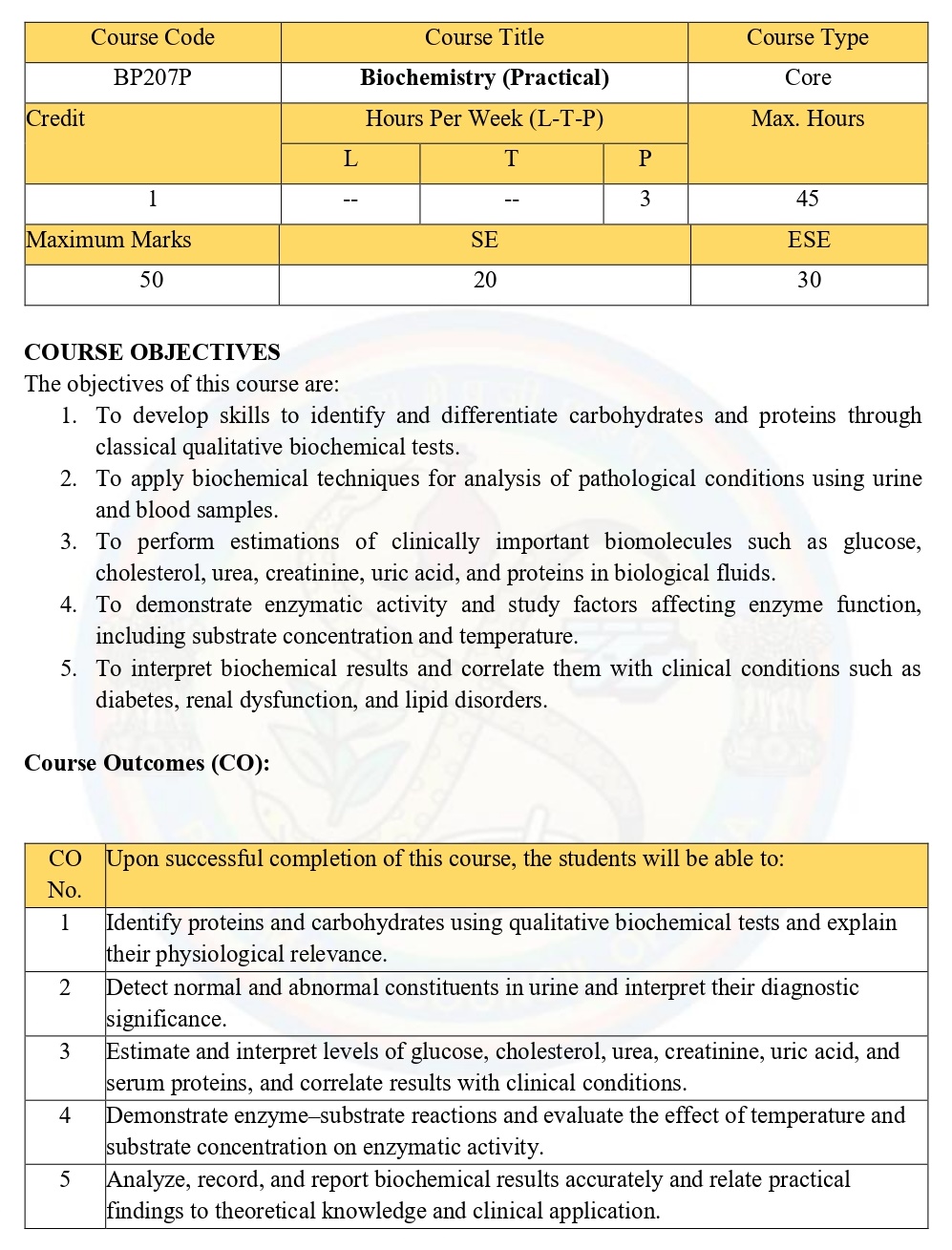
BP207P :
Biochemistry (Practical)
COURSE OBJECTIVES
The objectives of
this course are:
1. To develop skills
to identify and differentiate carbohydrates and proteins through classical
qualitative biochemical tests.
2. To apply
biochemical techniques for analysis of pathological conditions using urine and
blood samples.
3. To perform
estimations of clinically important biomolecules such as glucose, cholesterol,
urea, creatinine, uric acid, and proteins in biological fluids.
4. To demonstrate
enzymatic activity and study factors affecting enzyme function, including
substrate concentration and temperature.
5. To interpret
biochemical results and correlate them with clinical conditions such as
diabetes, renal dysfunction, and lipid disorders.
Course Outcomes
(CO):
Upon successful
completion of this course, the students will be able to:
1. Identify proteins
and carbohydrates using qualitative biochemical tests and explain their
physiological relevance.
2. Detect normal and
abnormal constituents in urine and interpret their diagnostic significance.
3. Estimate and
interpret levels of glucose, cholesterol, urea, creatinine, uric acid, and
serum proteins, and correlate results with clinical conditions.
4. Demonstrate
enzyme–substrate reactions and evaluate the effect of temperature and substrate
concentration on enzymatic activity.
5. Analyze, record,
and report biochemical results accurately and relate practical findings to
theoretical knowledge and clinical application.
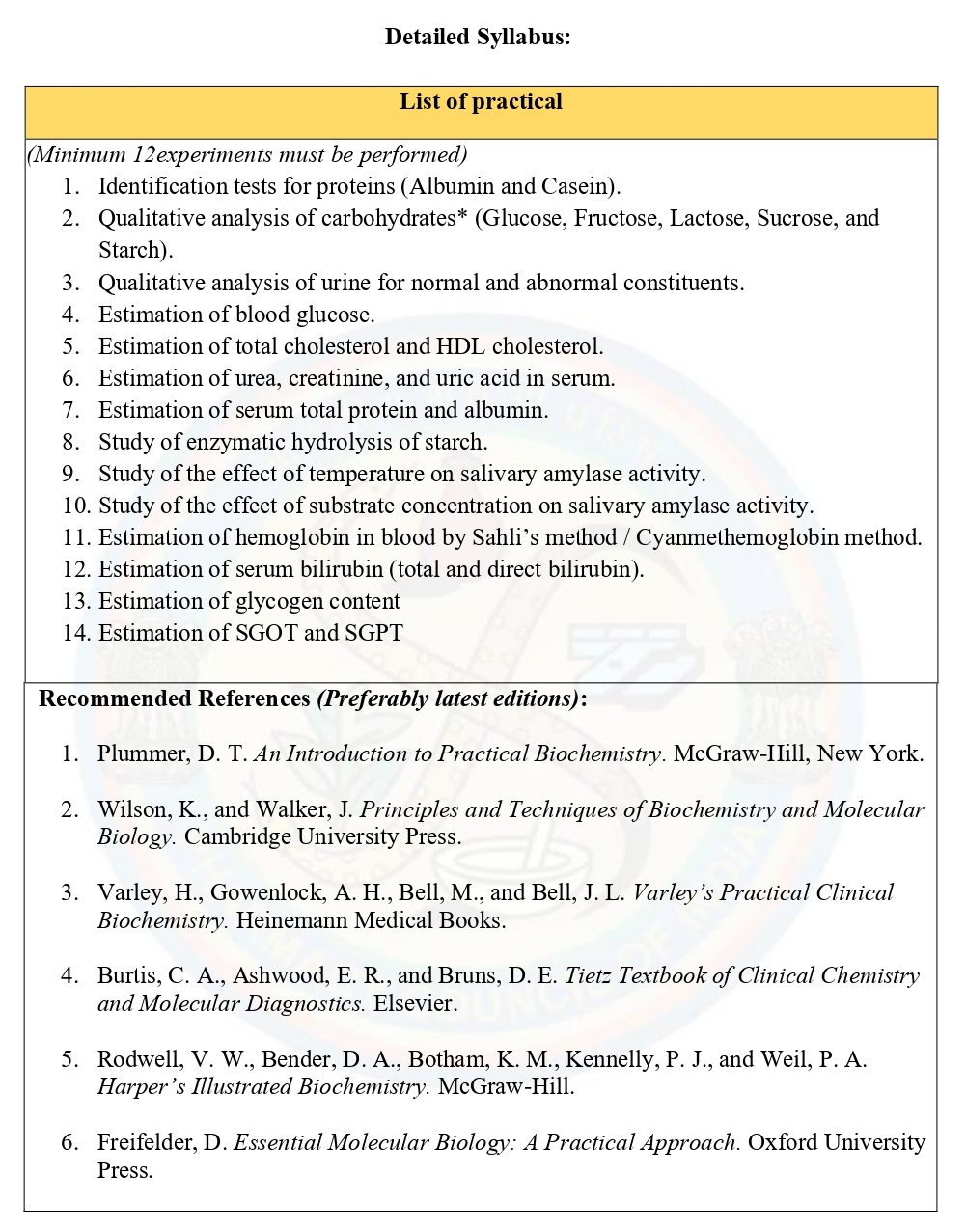
Detailed Syllabus:
List of practical
(Minimum
12experiments must be performed)
1. Identification
tests for proteins (Albumin and Casein).
2. Qualitative
analysis of carbohydrates* (Glucose, Fructose, Lactose, Sucrose, and Starch).
3. Qualitative
analysis of urine for normal and abnormal constituents.
4. Estimation of
blood glucose.
5. Estimation of
total cholesterol and HDL cholesterol.
6. Estimation of
urea, creatinine, and uric acid in serum.
7. Estimation of serum
total protein and albumin.
8. Study of enzymatic
hydrolysis of starch.
9. Study of the
effect of temperature on salivary amylase activity.
10. Study of the
effect of substrate concentration on salivary amylase activity.
11. Estimation of
hemoglobin in blood by Sahli’s method / Cyanmethemoglobin method.
12. Estimation of
serum bilirubin (total and direct bilirubin).
13. Estimation of
glycogen content
14. Estimation of
SGOT and SGPT
Recommended
References (Preferably latest editions):
1. Plummer, D. T. An
Introduction to Practical Biochemistry. McGraw-Hill, New York.
2. Wilson, K., and
Walker, J. Principles and Techniques of Biochemistry and Molecular Biology.
Cambridge University Press.
3. Varley, H.,
Gowenlock, A. H., Bell, M., and Bell, J. L. Varley’s Practical Clinical
Biochemistry. Heinemann Medical Books.
4. Burtis, C. A.,
Ashwood, E. R., and Bruns, D. E. Tietz Textbook of Clinical Chemistry and
Molecular Diagnostics. Elsevier.
5. Rodwell, V. W.,
Bender, D. A., Botham, K. M., Kennelly, P. J., and Weil, P. A.
Harper’s Illustrated
Biochemistry. McGraw-Hill.
6. Freifelder, D.
Essential Molecular Biology: A Practical Approach. Oxford University Press.